Best Things to Do in Traverse City, MI: Top Attractions (2026)
The best things to do in Traverse City, Michigan range from climbing the towering sand dunes of Sleeping Bear Dunes National Lakeshore to tasting estate Rieslings on a peninsula jutting into Grand Traverse Bay, swimming in Lake Michigan water so clear it reads as Caribbean blue in summer, cycling the M-22 scenic route along the Leelanau shoreline, and eating in a downtown that outperforms any comparable Midwest small city for restaurant quality. Traverse City — the self-proclaimed Cherry Capital of the World, producing approximately 40% of the US tart cherry crop — sits at the southern end of Grand Traverse Bay in northwestern lower Michigan and draws over 3.5 million visitors annually to a region of extraordinary natural beauty and well-developed food, wine, and outdoor culture.
For a complete trip overview, start with our Traverse City Travel Guide. To plan your days efficiently, see our Traverse City Itinerary.
Top Things to Do in Traverse City
1. Sleeping Bear Dunes National Lakeshore
Sleeping Bear Dunes National Lakeshore, 35 miles west of Traverse City via M-72, protects 35 miles of Lake Michigan shoreline, two offshore islands (North and South Manitou), and the most spectacular freshwater dune system in North America. The park was voted the “Most Beautiful Place in America” by Good Morning America viewers in 2011. Park entry is $25/vehicle (7-day pass). The essential experiences:
- Dune Climb: The park’s most visited attraction — a 150-foot open sand face with Lake Michigan visible from the top. 15-minute climb. Free with park entry.
- Pierce Stocking Scenic Drive: 7.4-mile paved loop with 12 overlooks including the 450-foot Lake Michigan Overlook — the highest dune crest viewpoint.
- Empire Bluffs Trail: 1.5-mile round trip through forest to a 400-foot bluff overlook — the best accessible panoramic view in the park.
- Glen Haven Beach: A remote, uncrowded Lake Michigan beach accessible via the historic village — one of the clearest and most beautiful freshwater beaches in the US.
- Sleeping Bear Heritage Trail: 22-mile paved trail connecting park communities, popular with cyclists and families.
2. Old Mission Peninsula Wine Trail
The Old Mission Peninsula is an 18-mile finger of land bisecting Grand Traverse Bay — a cool-climate wine appellation producing Riesling, Pinot Noir, Pinot Gris, and Chardonnay of genuine quality. The peninsula sits on the 45th Parallel (the halfway point between the equator and the North Pole) and benefits from the lake’s moderating influence, extending the growing season by several weeks relative to inland Michigan. Over 10 wineries operate on the peninsula alone; the broader Traverse City Wine Trail spans more than 40 wineries across both the Old Mission and Leelanau Peninsulas.
Top Old Mission Peninsula wineries:
- Chateau Chantal — hilltop château with 360-degree bay views; Riesling and sparkling wines
- Brys Estate Vineyard — estate-grown Pinot Noir; relaxed outdoor tasting setting
- 2 Lads Winery — modern tasting room; Bordeaux-style blends and sparkling wine
- Bowers Harbor Vineyards — historic Victorian home setting; broad range of varietals
- Chateau Grand Traverse — the pioneer of Michigan wine (est. 1974); reliable Riesling and ice wine
3. Lake Michigan Beaches
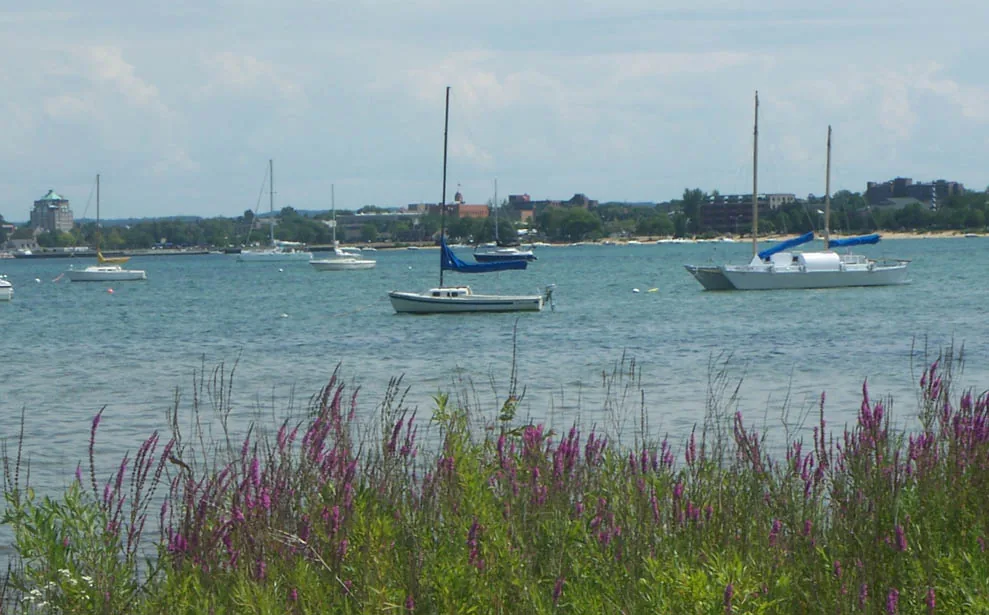
Traverse City’s beaches are its most underestimated asset. Grand Traverse Bay’s freshwater has the turquoise clarity and sandy-bottom visibility of a tropical sea in summer — without the salt, jellyfish, or sharks. The water warms to 70–78°F by mid-July in the protected bay shallows. Key beaches:
- Clinch Park Beach: The main city beach on the West Bay, 2 blocks from Front Street. Free, lifeguarded in summer.
- East Bay Park: Warmer, calmer water than West Bay; shallower entry for children. Free.
- West End Beach: The most popular public beach on the West Bay; sandy with gentle waves. Free parking on weekdays; fee on summer weekends.
- Sleeping Bear Dunes beaches: Glen Haven, Platte River Point, and North Bar Lake offer the most remote and beautiful swimming in the region.
4. National Cherry Festival
The National Cherry Festival, held annually during the first full week of July in downtown Traverse City, is one of the largest festivals in Michigan — drawing approximately 500,000 visitors over 8 days. Events include a cherry pie eating contest, a grand parade, the USAF Thunderbirds air show (most years), live concerts, carnival rides, a 5K cherry pit spit competition, and endless cherry-derived food products. The festival has operated since 1926 and reflects the genuine agricultural identity of the region — not a manufactured tourist event. Plan accommodation 6–12 months ahead for Festival week.
5. M-22 Scenic Drive and Leelanau Peninsula
M-22 is a 116-mile scenic highway running from Traverse City north along the Leelanau Peninsula shoreline and south along Lake Michigan to Ludington — named “one of America’s most scenic drives” by multiple national travel publications. The northern Leelanau section passes through the wine country villages of Suttons Bay and Northport, along cliffs and dunes above Lake Michigan, and through the Sleeping Bear Dunes corridor. The M22 brand — apparel and stickers based on the highway number — has become one of Michigan’s most recognized travel symbols. Key stops: Leelanau State Park (lighthouse hike), Suttons Bay (wine village, 9 Bean Rows restaurant), and Good Harbor Vineyards (Leelanau wine country).
6. Downtown Traverse City
Downtown Traverse City’s Front Street and the surrounding blocks contain one of the most compelling independent retail and restaurant districts in the American Midwest for a city of its size. The State Theatre (233 E Front St) — a restored 1916 movie palace now operated as an independent cinema — anchors the block with daily film screenings. Horizon Books (243 E Front St) is a beloved independent bookstore spread across multiple floors. The weekly Sara Hardy Downtown Farmers Market (Saturdays, May–October, at Grandview Parkway) draws dozens of regional vendors. The overall atmosphere on a summer Saturday evening — foot traffic, open restaurant patios, the bay visible at the end of the side streets — is genuinely memorable.
7. Crystal River Kayaking
The Crystal River in Glen Arbor, 35 miles west of Traverse City near Sleeping Bear Dunes, is one of the clearest rivers in Michigan — spring-fed, cold, and averaging 6–8 feet of visibility through the water column. Crystal River Outfitters (6052 Western Ave, Glen Arbor) rents kayaks and canoes for a 2–3 hour self-guided float from the put-in to the Lake Michigan take-out, passing through cedar swamps, under low-hanging hardwoods, and over a sandy bottom visible in complete clarity. One of northern Michigan’s most distinctive afternoon experiences. Season: June through September.

8. Traverse City Craft Brewery Scene
Traverse City’s brewery scene is disproportionately strong for its population. Key taprooms:
- Right Brain Brewery (225 E 16th St) — award-winning experimental beers; the Mangalitsa Pig Porter (brewed with smoked pork) became nationally famous
- North Peak Brewing Company (400 W Front St) — best brewpub atmosphere; opera house building; Sidetrack Amber Ale
- The Workshop Brewing Company (Grand Traverse Commons) — 30+ taps in a repurposed asylum building; the most interesting location of any Traverse City brewery
- Rare Bird Brewpub (229 Lake Ave) — small, beloved neighborhood brewpub
Short’s Brewing Company in Bellaire (45 minutes east) is one of Michigan’s most celebrated craft breweries and worth the drive for serious beer travelers.
9. The Village at Grand Traverse Commons
The Grand Traverse Commons is the adaptive reuse of the 63-acre Traverse City State Hospital campus — a National Historic Landmark of Kirkbride-plan Victorian architecture built in 1885. The ongoing conversion has produced a mixed-use neighborhood of restaurants, shops, breweries, wine bars, and apartments inside the original red-brick asylum wings. Walking the grounds gives insight into 19th-century psychiatric hospital design philosophy; the surrounding forests and trails are open to the public. The Commons hosts a weekly market and regular events throughout the summer.
10. Cycling the Leelanau Trail and TART Trail
The TART Trail (Traverse Area Recreation and Transportation) is a 10-mile paved multi-use path running along the West Bay waterfront through downtown Traverse City and connecting to the Leelanau Trail, which extends north 15 miles to Suttons Bay. The combined route is the best cycling experience in northern Michigan — flat, paved, and running alongside the bay for much of its length with views of the water and the Old Mission Peninsula across the bay. Bike rentals are available from several downtown shops including McLain Cycle and Fitness (2786 Garfield Rd N).

Traverse City Attractions: At a Glance
| Attraction | Distance from Downtown | Cost | Best Season |
|---|---|---|---|
| Sleeping Bear Dunes NL | 35 miles W | $25/vehicle | Jun–Sep |
| Old Mission Wine Trail | 0–18 miles N | $15–$25 tasting fee | May–Oct |
| Clinch Park Beach | In downtown | Free | Jun–Sep |
| National Cherry Festival | Downtown | Free (most events) | Early July |
| Crystal River Kayak | 35 miles W | $40–$55/person | Jun–Sep |
| Grand Traverse Commons | 1 mile S | Free (to explore) | Year-round |
| TART Trail Cycling | Starts downtown | Free (bike rental ~$30) | May–Oct |
Frequently Asked Questions
What is Traverse City best known for?
Traverse City is best known as the Cherry Capital of the World (producing approximately 40% of the US tart cherry crop), for Sleeping Bear Dunes National Lakeshore, for the Old Mission and Leelanau Peninsula wine trails with over 40 wineries, for its Lake Michigan beaches, and for the National Cherry Festival held each July.
Is Traverse City worth visiting in winter?
Yes, for specific activities. Crystal Mountain Resort (28 miles southwest) and Shanty Creek Resort (50 miles east) offer skiing from December through March. Downtown TC stays lively with wine tastings, restaurants, and the Ice Fest in February. Hotel rates drop 40–60% from summer peak.
How far is Traverse City from Detroit and Chicago?
Traverse City is approximately 260 miles north of Detroit (4–4.5 hours by car via US-131 or I-75 and M-72) and approximately 320 miles northeast of Chicago (4.5–5 hours via I-94 and US-131). Both cities generate significant weekend visitor traffic to TC in summer.
Build your days with our Traverse City Itinerary, plan a shorter visit with our Traverse City Weekend Trip guide, and find your hotel with Where to Stay in Traverse City.