
Traverse City Itinerary: Perfect 3-Day Northern Michigan Trip (2026)
A Traverse City itinerary spanning three days gives you the full sweep of what makes northern Michigan one of the most distinctive travel destinations in the American Midwest: turquoise Lake Michigan beaches that rival the Caribbean in summer, wine country spread across two lakeside peninsulas with over 40 wineries and tasting rooms, the towering sand dunes of Sleeping Bear Dunes National Lakeshore voted the most beautiful place in America by Good Morning America viewers in 2011, and a walkable downtown with independent restaurants, breweries, and boutiques that punch well above their weight for a city of 15,000. Three days covers the essential circuit — the dunes, the wine trail, and the beaches — with evenings to explore what locals call “TC.”
For a full destination overview, read our Traverse City Travel Guide. Planning a shorter visit? Our Traverse City Weekend Trip guide distills the best of the city into 48 hours.
Day 1: Downtown Traverse City and East Bay
Morning: Downtown Front Street and Clinch Park
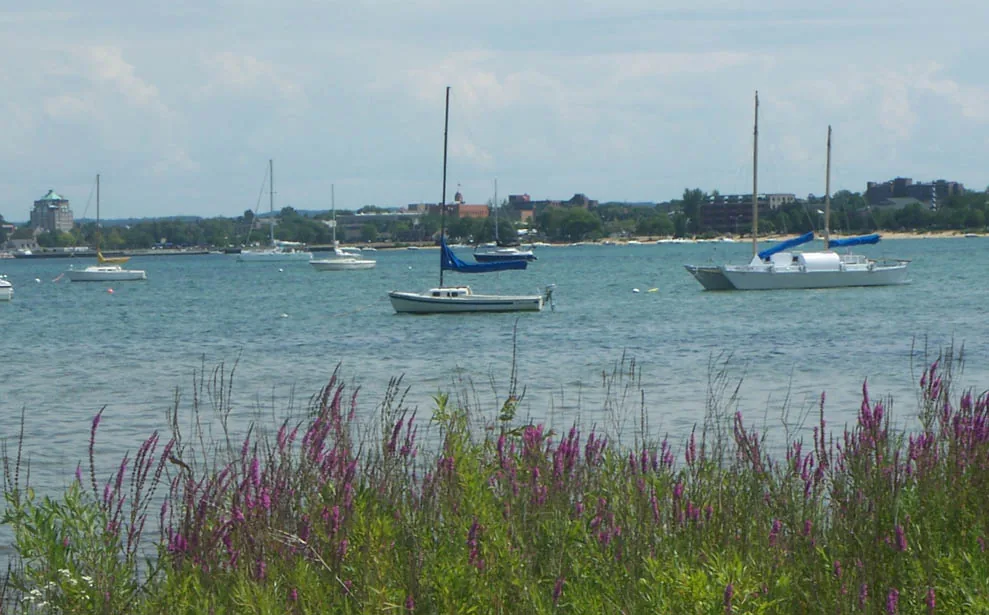
Begin your first morning on Front Street — Traverse City’s main commercial corridor running parallel to the West Arm of Grand Traverse Bay. The street holds an unusually high concentration of independent boutiques, galleries, coffee shops, and the kind of locally owned businesses that distinguish TC from comparable-sized Midwest towns. Pick up coffee at Higher Grounds Trading Co. (806 Red Dr) — a nationally recognized specialty roaster whose coffees are sourced through direct-trade relationships. Walk west to Clinch Park Beach at the foot of Cass Street — a city-maintained freshwater beach on West Grand Traverse Bay with views across the bay toward the Old Mission Peninsula lighthouse. In summer the water temperature reaches 72–78°F and the blue-green color is genuinely striking.
Midday: The Village at Grand Traverse Commons
Drive or walk 10 minutes south to The Village at Grand Traverse Commons — a remarkable adaptive reuse project converting the Victorian-era Traverse City State Hospital (built 1885) into a mixed-use neighborhood of restaurants, shops, and apartments. The 63-acre complex of red-brick Kirkbride-style buildings surrounding a tree-lined commons is the most architecturally distinctive place in northern Michigan. Walk the grounds, visit the independently operated shops inside the old asylum wings, and have lunch at The Workshop Brewing Company — a brewpub in the repurposed main building with 30+ house-brewed beers and solid pub food. Budget $20–$30 per person.
Afternoon: East Bay and Old Town
Spend the afternoon at East Bay Park on the East Arm of Grand Traverse Bay — a quieter, shallower beach than the West Bay, warmer in summer (protected from prevailing winds), and popular with families. The water clarity on calm days is exceptional — you can see the sandy bottom in 10 feet of water. Return to downtown in late afternoon and explore the Old Town neighborhood around Eighth Street and Boardman Avenue — Traverse City’s arts district with galleries, a weekly farmers market (operating Saturdays May through October), and the Traverse City Film Festival venues (the festival, founded by Michael Moore, runs each July).
Evening: Dinner Downtown
Trattoria Stella (Village at Grand Traverse Commons) is Traverse City’s most celebrated restaurant — Northern Italian cooking in the repurposed hospital basement using local Michigan ingredients. The house-made pasta changes with the season; the wine list spans Italian and northern Michigan bottles. Budget $45–$65 per person. Reserve well in advance. For a more casual alternative, 9 Bean Rows (Mill Rd, Suttons Bay) is a farm-to-table favorite 15 minutes north known for its inventive seasonal menu.
Day 2: Sleeping Bear Dunes National Lakeshore
Morning: Empire Bluffs and the Pierce Stocking Scenic Drive
Leave Traverse City by 8 a.m. for the 35-mile drive west on M-72 to Sleeping Bear Dunes National Lakeshore. The park protects 35 miles of Lake Michigan shoreline, two offshore islands, and the massive glacially formed dune complex that gives it its name. Entry is $25/vehicle (7-day pass) or covered by the America the Beautiful Pass.
Start with the Empire Bluffs Trail (1.5 miles round trip, moderate) — a forest path that emerges at a 400-foot bluff overlooking Lake Michigan and the dune complex. The view from the top is the park’s most accessible and most dramatic panorama. Allow 1 hour. Then drive the Pierce Stocking Scenic Drive (7.4 miles, paved loop with 12 labeled stops) — the best way to understand the dune landscape from your car, with stops at the Lake Michigan Overlook (the highest dune crest viewpoint at 450 feet above the lake) and the Sleeping Bear Dune itself.
Midday: Dune Climb and Glen Haven
The Dune Climb at the Sleeping Bear Dunes trailhead is the park’s signature experience — a 150-foot open sand face that visitors climb for the view of Lake Michigan behind the dune crest. The climb takes 15–20 minutes up; getting down is faster. The full 3.5-mile hike from the Dune Climb to Lake Michigan and back is strenuous (4–5 hours) and requires carrying water — the open sand reflects intense heat in summer. Even the 30-minute summit-and-back at the Dune Climb alone is worth the stop.
Continue to Glen Haven Historic Village — a restored 1920s village at the park’s northern end with a working blacksmith shop, a former Coast Guard station, and a cannery museum. Free with park admission. The adjacent Glen Haven Beach is one of the most beautiful freshwater swimming beaches in the United States — clear water, white sand, no crowds compared to popular Great Lakes beaches.
Afternoon: Crystal River and Riverside Canoe
On the return to Traverse City, stop at the Crystal River in Glen Arbor — a spring-fed stream running cold and gin-clear from Crystal Lake to Lake Michigan. Riverside Canoe Trips (Crystal River Outfitters, 6052 Western Ave, Glen Arbor) rents kayaks and canoes for a 2–3 hour self-guided float down the Crystal River, passing under cedar canopies and through crystal-clear water. One of the most enjoyable afternoon activities in northern Michigan. Book in advance for summer weekends.

Evening: Sunset Dinner in Glen Arbor or Traverse City
For dinner near the park, Art’s Tavern in Glen Arbor is a northern Michigan institution — reliably good burgers, local beers, and a relaxed atmosphere. Back in Traverse City, Red Ginger (237 E Front St) serves pan-Asian cuisine with a strong cocktail program in a downtown setting. Budget $30–$45 per person.
Day 3: Old Mission Peninsula Wine Trail
Morning: Old Mission Peninsula Scenic Drive
The Old Mission Peninsula juts 18 miles north into Grand Traverse Bay, perfectly bisecting it into the East and West Arms. US-31 and Center Road (M-37) run the length of the peninsula to the Old Mission Lighthouse at the 45th Parallel — the halfway point between the equator and the North Pole. The drive along Center Road passes cherry and apple orchards, vineyard rows, and bay views on both sides simultaneously — one of the most scenic drives in Michigan. The lighthouse grounds are free to walk; the lighthouse building is open for tours in summer. Allow 45 minutes for the round trip to the tip.
Midday: Winery Tasting Trail
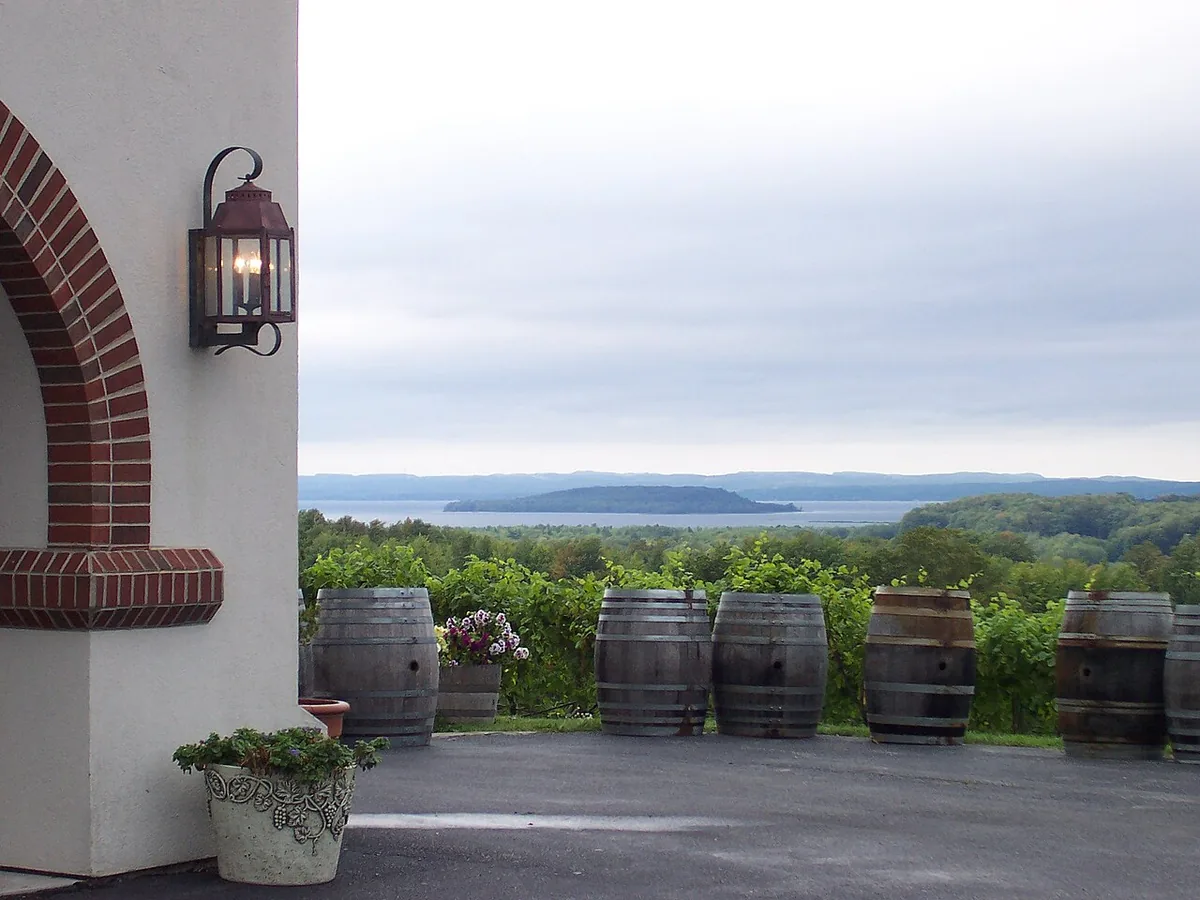
The Old Mission Peninsula is part of the Traverse City Wine Trail — one of the most productive cool-climate wine regions in the Midwest, with conditions comparable to Burgundy and Alsace. The peninsula’s position between two arms of the bay moderates temperatures, extending the growing season and enabling Riesling, Pinot Noir, and Chardonnay to develop complexity unusual for Michigan. Three wineries worth a stop:
- Chateau Chantal (15900 Rue de Vin) — the most architecturally striking winery in northern Michigan, a French-style château on the highest ridge of the peninsula with 360-degree bay views. Known for Riesling and dessert wines.
- Brys Estate Vineyard and Winery (3309 Blue Water Rd) — estate-grown Pinot Noir and Pinot Grigio in a relaxed setting with covered outdoor tables facing the vineyard rows. Tasting fee: $20.
- 2 Lads Winery (16985 Smokey Hollow Rd) — modern, minimalist tasting room with a focus on Bordeaux-style blends and sparkling wines. One of the most food-friendly lineups on the peninsula.
Afternoon: Cherry Orchards and Farmers Market
In season (mid-July through early August), the Old Mission and Leelanau Peninsulas are lined with U-pick cherry orchards. Traverse City produces approximately 40% of the US tart cherry crop — the cherries are a genuine regional identity, not a tourist fabrication. Stop at Amon Orchards (8066 US-31 N) for U-pick cherries and the farm market for dried cherry products, cherry wine, and cherry salsa. Even outside cherry season, the farm market sells Michigan produce year-round.
Evening: Farewell Dinner at North Peak
North Peak Brewing Company (400 W Front St) is Traverse City’s best brewpub — housed in a former 1900s opera house with the original brick and timber intact, serving Michigan-sourced food alongside well-made house beers. The Sidetrack Amber Ale and Diabolical IPA are standouts. Budget $25–$35 per person. End the evening with a walk along the West Bay boardwalk as the sun sets over the water — the light on Grand Traverse Bay in summer evenings is exceptional.

3-Day Traverse City Itinerary: Quick Reference
| Day | Morning | Afternoon | Evening |
|---|---|---|---|
| Day 1 | Front Street + Clinch Park Beach | Grand Traverse Commons + East Bay | Trattoria Stella dinner |
| Day 2 | Empire Bluffs + Sleeping Bear Dunes | Glen Haven Beach + Crystal River kayak | Red Ginger downtown |
| Day 3 | Old Mission Peninsula drive + lighthouse | Winery tasting trail | North Peak Brewing farewell |
Practical Tips for a Traverse City Itinerary
- National Cherry Festival (July): The first full week of July brings 500,000+ visitors to Traverse City for the National Cherry Festival — the largest annual event in Michigan. Hotels book out a year in advance at peak rates. Extraordinary atmosphere but plan well ahead.
- Wine tasting driving: The Old Mission and Leelanau Peninsula wineries are spread across 20–40 miles of rural roads. Designate a driver, or use one of the several wine tour companies operating from downtown Traverse City.
- Sleeping Bear Dunes heat: The open sand dunes reflect intense heat in summer — temperatures at the dune surface exceed air temperature by 20–30°F. Carry at least 2 liters of water per person for any dune hiking beyond the Dune Climb base.
Frequently Asked Questions
How many days do you need in Traverse City?
Three days covers Sleeping Bear Dunes, the Old Mission wine trail, downtown TC, and East Bay beaches. Four to five days allows for the Leelanau Peninsula, Petoskey, the M-22 scenic drive, and a slower pace. Most visitors wish they had booked one more night.
What is the best time of year to visit Traverse City?
Late June through September offers the best beach weather and full access to all attractions. Cherry season (mid-July) and the National Cherry Festival are peak experiences. Fall (September–October) brings wine harvest season with fewer crowds and golden vineyard views.
Is a car necessary in Traverse City?
Yes — Sleeping Bear Dunes, the wine trails, and peninsula drives require a car. Downtown TC is walkable for beaches, restaurants, and breweries. A car or bike covers everything within the city limits; a car is essential for any day excursion.
For the full activities list, see Best Things to Do in Traverse City. For accommodation, read Where to Stay in Traverse City. For a focused 2-day plan, see our Traverse City Weekend Trip guide.


3 Comments