

St Augustine Itinerary: The Perfect 3-Day Trip to America’s Oldest City (2026)
St. Augustine, Florida is the oldest continuously occupied European-established settlement in the United States — founded by Spanish explorer Pedro Menéndez de Avilés on September 8, 1565, more than 55 years before the Pilgrims landed at Plymouth Rock. Three days in St. Augustine gives you enough time to explore the 144-block National Historic Landmark District on foot, visit the oldest masonry fort in the continental US, tour the gilded Gilded Age mansions Henry Flagler built along the bayfront, walk the beaches of Anastasia Island, and catch an evening ghost tour through streets that have been haunted since the 17th century.
For all the practical details on getting there, weather, and budgeting, see our complete St. Augustine travel guide.
Day 1: Historic District, Castillo de San Marcos, and St. George Street
Morning: Castillo de San Marcos
Start your St. Augustine trip at the Castillo de San Marcos — the oldest masonry fort in the continental United States, built by the Spanish between 1672 and 1695 from coquina (a soft limestone of compressed shells) quarried from Anastasia Island. The Castillo has never fallen to military assault. Its walls, 12–19 feet thick, absorbed cannon fire during two British sieges by deflecting rather than shattering — a property unique to coquina that made the fort effectively impregnable.
- Admission: $15 per adult, free for children 15 and under
- Hours: Daily 9 a.m. to 5 p.m. (last entry 4:45 p.m.)
- Time needed: 60–90 minutes
- Ranger programs: Free cannon firing demonstrations run daily at 11 a.m. and 2:45 p.m. — worth timing your visit around
Late Morning: St. George Street Pedestrian District
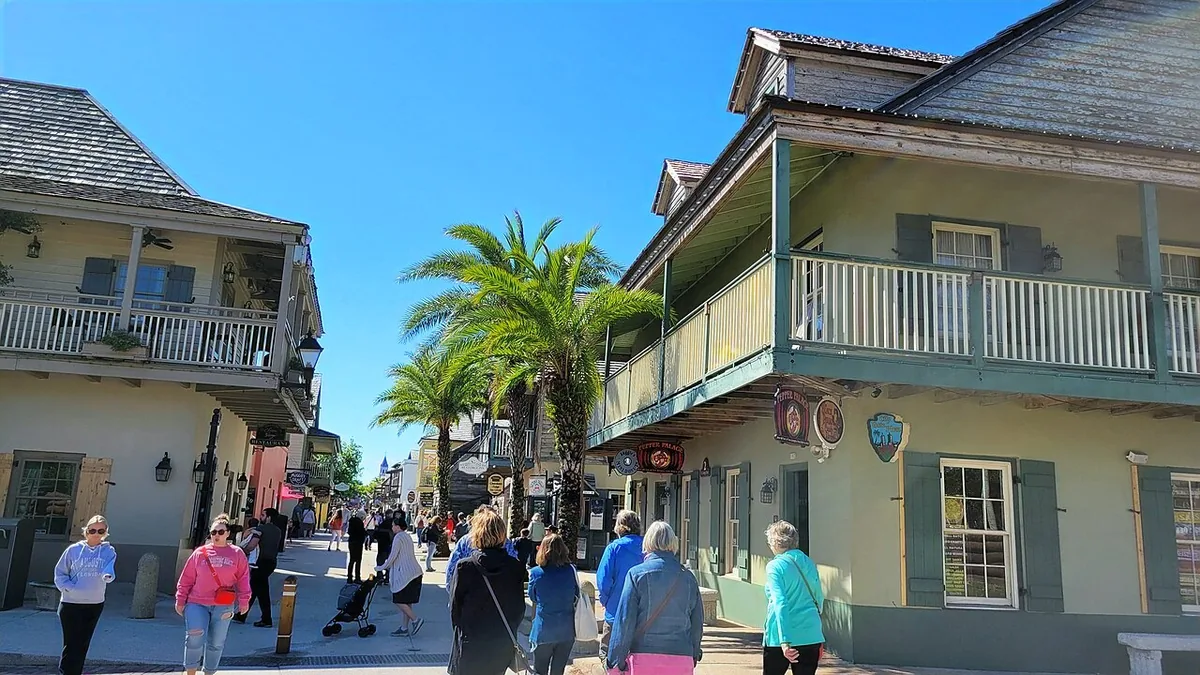
St. George Street is the heart of St. Augustine’s tourist district — a pedestrian-only cobblestone lane running six blocks through the heart of the historic city. Spanish Colonial architecture lines both sides, housing shops, restaurants, galleries, and a handful of living history sites including the Colonial Quarter (open-air living history museum, $13.99 adults) and the Oldest Wooden Schoolhouse (built before 1716, $5 admission).
Stop at the Spanish Bakery on Charlotte Street for empanadas and Cuban bread baked in an outdoor wood-fired oven — one of the most atmospheric food stops in the historic district.
Lunch: The Floridian
The Floridian (39 Cordova St) is St. Augustine’s best locally-sourced restaurant — a farm-to-table cafe in a 1920s building using produce from Northeast Florida farms and local Gulf seafood. The shrimp and grits and the pimento cheese plate are both essential orders. They serve brunch all day; arrive by 11:30 a.m. on weekends to beat the wait.
Afternoon: Flagler College and Lightner Museum
Flagler College occupies the 1888 Ponce de León Hotel — one of the finest examples of Spanish Renaissance Revival architecture in the United States, built by Standard Oil co-founder Henry Flagler as the most luxurious hotel in America. The building’s dining hall (now the college cafeteria), with its 79 Tiffany stained glass windows, is considered the finest collection of Tiffany glass in the world in a single room. Public tours of the interior run daily at 10 a.m. and 2 p.m. for $15 per person.
Directly across Cordova Street, the Lightner Museum occupies Flagler’s 1889 Alcazar Hotel — its three-story former indoor swimming pool is now filled with antiques, Gilded Age art, and Victorian curiosities. Admission is $15 for adults. The Café Alcazar in the pool bottom serves lunch Tuesday through Sunday and is one of the most theatrical dining rooms in Florida.
Evening: Bayfront Sunset and Ghost Tour
Walk the Matanzas Bayfront at sunset — the Bridge of Lions bascule bridge (1927) and the Castillo de San Marcos framing the bayfront together make one of the most photographed views in Florida at golden hour. Grab dinner at A1A Ale Works (1 King St) for bayfront views and solid Florida seafood, then join an evening ghost tour departing from the Old City Gate (9 p.m. nightly). St. Augustine’s ghost tour industry is extensive — see our guide to the best things to do in St. Augustine for a tour operator comparison.
Day 2: Anastasia Island, Lighthouse, and the Beach
Morning: St. Augustine Lighthouse
The St. Augustine Lighthouse, built in 1874 on the northern tip of Anastasia Island, is the oldest lighthouse in Florida still in operation. Its black-and-white spiral-striped tower rises 165 feet and requires climbing 219 steps to reach the lantern room — where the original 1874 third-order Fresnel lens is still in use. The lighthouse keeper’s house is now a museum covering the lighthouse’s 150-year history and its extensive paranormal reputation (it’s one of the most investigated haunted sites in Florida).
- Admission: $14.95 adults, $11.95 children 7–11
- Hours: Daily 9 a.m. to 6 p.m.
- Night climbs: Friday and Saturday evenings — tickets $30, book ahead
Midday: Anastasia State Park
Anastasia State Park preserves 4 miles of undeveloped Atlantic coastline on Anastasia Island — some of the least-crowded beach on Florida’s northeast coast. The park also contains the ancient coquina quarry that provided the stone for the Castillo de San Marcos, accessible via a 0.5-mile walking trail through the scrub. Kayak and paddleboard rentals are available at the park’s Salt Run lagoon, which is calmer and safer for paddling than the ocean side.

- Entry: $8 per vehicle (up to 8 passengers)
- Hours: 8 a.m. to sundown daily
- Best for: Swimming, shelling, kayaking, beachcombing
Afternoon: Fountain of Youth Archaeological Park
The Fountain of Youth Archaeological Park marks the site where Ponce de León is believed to have made landfall in 1513 and where Pedro Menéndez de Avilés established the first permanent European settlement in North America in 1565. The park contains the original spring that gave rise to the Fountain of Youth legend (you can still drink from it), a Timucua Native American village recreation, a working 16th-century Spanish settlement exhibit, and an active archaeological excavation. It’s more substantive than the name suggests.
- Admission: $18 adults, $10 children 6–12
- Hours: Daily 9 a.m. to 5 p.m.
Evening: Dinner at O.C. White’s Seafood
O.C. White’s Seafood and Bar (118 Avenida Menendez) occupies a 1790 Spanish Colonial building on the bayfront — one of the most atmospheric waterfront dining rooms in northeast Florida. The seafood is genuinely excellent; the shrimp Florentine and the whole fried flounder are both standout dishes. The second-floor balcony tables overlooking the Matanzas River are worth requesting at reservation.
Day 3: Castillo Grounds, Vilano Beach, and Departure
Morning: Colonial Quarter Living History Museum
The Colonial Quarter on St. George Street recreates 300 years of St. Augustine’s layered history — a Spanish Colonial village, a British colonial home, and an early American settlement, all staffed by costumed interpreters demonstrating period crafts. Blacksmithing, musket loading, and colonial cooking demonstrations run throughout the day. It’s genuinely engaging rather than merely decorative.
Midday: Vilano Beach
Vilano Beach, north of the historic district across the Tolomato River, is St. Augustine’s quietest and most local beach — a narrow Atlantic-facing barrier island with seafood restaurants, a small pier, and noticeably fewer crowds than Anastasia Beach. Reef and Beaches Restaurant on Vilano Road are both excellent for a casual seafood lunch.
Afternoon: Ripley’s Believe It or Not! and Departure
Ripley’s Believe It or Not! Museum occupies a 1887 Moorish Revival building on San Marco Avenue — one of the most architecturally striking structures in St. Augustine, built as Castle Warden and later used as a hotel where Robert Ripley himself stayed. The museum is family-focused and worth 60–90 minutes if you have children traveling with you. After Ripley’s, the drive north to Jacksonville Airport (40 minutes) or south toward Orlando (2 hours) makes St. Augustine an ideal start or finish point for a longer Florida road trip.

3-Day St. Augustine Itinerary: Quick Reference
| Day | Morning | Afternoon | Evening |
|---|---|---|---|
| Day 1 | Castillo de San Marcos | Flagler College + Lightner Museum | Bayfront sunset + ghost tour |
| Day 2 | St. Augustine Lighthouse | Anastasia State Park + Fountain of Youth | O.C. White’s Seafood |
| Day 3 | Colonial Quarter | Vilano Beach + Ripley’s | Depart or continue road trip |
For hotel recommendations at every budget, see our St. Augustine accommodation guide. Short on time? Our St. Augustine weekend trip guide condenses the highlights into 2 days.
Frequently Asked Questions
How many days do you need in St. Augustine?
Two days is enough for a focused visit to the historic district highlights. Three days allows for the lighthouse, Anastasia State Park beach, and a ghost tour in addition to the main historic sites. Four days works well for a full beach and history combination, particularly in spring or fall.
Is St. Augustine walkable?
The Historic District is very walkable — the six-block St. George Street pedestrian zone and the surrounding historic sites cover about 1.5 miles on flat terrain. The lighthouse and Anastasia State Park are on Anastasia Island across the Bridge of Lions, requiring a car or rideshare (10 minutes). Fountain of Youth is 0.7 miles north of the fort — walkable but warm in Florida summer.
What is the best time of year to visit St. Augustine?
The best time to visit St. Augustine is October through April, when temperatures range from 65–78°F and humidity drops from its summer peak. December is particularly magical — the Nights of Lights festival illuminates the entire historic district with 3 million white lights from mid-November through late January.
Can you do St. Augustine as a day trip from Orlando or Jacksonville?
Yes — St. Augustine is 100 miles northeast of Orlando (1.5 hours on I-95) and 40 miles south of Jacksonville (40 minutes). It makes an excellent day trip from either city, though staying overnight allows for the evening ghost tours and the Nights of Lights experience that define St. Augustine at its best.



2 Comments