St Augustine Travel Guide: Everything You Need to Know (2026)
St. Augustine, Florida is unlike any other city in the American South — a 461-year-old Spanish colonial city with a walkable 144-block historic district, the oldest masonry fort in the continental United States, Gilded Age mansion hotels, 4 miles of Atlantic beach on Anastasia Island, and a paranormal reputation substantial enough to support one of the most active ghost tour industries in the country. This complete St. Augustine travel guide covers everything you need to plan a trip in 2026.
St. Augustine at a Glance
- State: Florida (northeast coast, St. Johns County)
- Founded: September 8, 1565 — oldest continuously occupied European-established city in the US
- Population: ~15,000 (city), ~265,000 (St. Johns County — one of the fastest-growing counties in Florida)
- Location: 40 miles south of Jacksonville, 60 miles north of Daytona Beach, 100 miles northeast of Orlando
- Known for: Castillo de San Marcos, Flagler College, Nights of Lights, ghost tours, Anastasia Island beach
- Annual visitors: Over 7 million per year
- Climate: Humid subtropical — warm year-round, hot and humid July–August, mild and pleasant October–April
Brief History of St. Augustine
St. Augustine’s history spans five distinct periods that are all visible in its architecture and cultural landscape today:
- Timucua period (pre-1565): The area was home to the Timucua people for at least 1,000 years before European contact. The Fountain of Youth Archaeological Park preserves the site of the primary Timucua village encountered by Ponce de León in 1513.
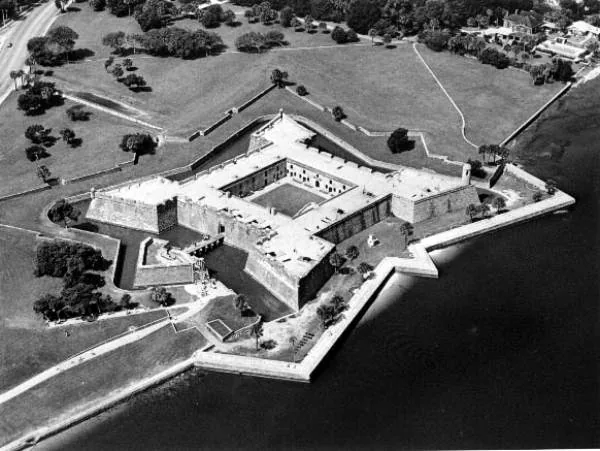
- First Spanish period (1565–1763): Pedro Menéndez de Avilés established St. Augustine as the administrative center of Spanish Florida. The Castillo de San Marcos (1672–1695) was built during this period.
- British period (1763–1783): Spain ceded Florida to Britain after the Seven Years’ War. Several of the city’s surviving 18th-century buildings date to this period, including the St. Francis Inn (c. 1791).
- Second Spanish period (1783–1821): Britain returned Florida to Spain; the city remained Spanish until American acquisition in 1821.
- Flagler era (1880s–1913): Henry Flagler transformed St. Augustine into America’s premier winter resort, building the Ponce de León Hotel (now Flagler College) and the Alcazar Hotel (now the Lightner Museum) and extending his Florida East Coast Railway through the city.
When to Visit St. Augustine
Best overall: October through April
The ideal window to visit St. Augustine is October through April — temperatures range from 65–78°F, humidity drops from its summer peak, and the historic district is at its most comfortable to walk. This six-month window includes the Nights of Lights festival (mid-November through late January) — by far the most spectacular seasonal event in the city, when 3 million white lights illuminate the entire historic district.
Peak season: Nights of Lights (mid-November through January)
National Geographic named Nights of Lights one of the top 10 holiday light displays in the world. The festival draws over 1 million visitors and is the single busiest period of the year for St. Augustine accommodations. Book hotels 4–6 months ahead for December weekends. The lights are free to walk; paid boat tours and carriage rides offer alternative viewing experiences.
Spring (March–May): Busy but beautiful
Spring break (March) and spring weekends bring significant crowds to the historic district. April and May are excellent — crowds thin from spring break peak, azaleas bloom in the historic gardens, and temperatures are ideal. Easter weekend is the second busiest period of the year after the Nights of Lights peak.
Summer (June–August): Hot, humid, but manageable
St. Augustine summers are genuinely hot and humid — highs of 90–94°F with heat indices regularly exceeding 100°F. The beach at Anastasia State Park is the main draw in summer. Historic district walking is most comfortable before 10 a.m. and after 5 p.m. Hotel rates are lower than peak season by 15–25%.
How to Get to St. Augustine
By air
St. Augustine Airport (UST) serves limited regional flights and is primarily used by private aviation. The practical options for flying to St. Augustine are:
- Jacksonville International Airport (JAX): 40 miles north, 40-minute drive. Served by all major US airlines with direct flights from 50+ cities. Best option for most visitors.
- Daytona Beach International Airport (DAB): 60 miles south, 60-minute drive. Smaller airport with fewer flights.
- Orlando International Airport (MCO): 100 miles southwest, 1.5-hour drive. Best option if combining St. Augustine with an Orlando trip.
By car
St. Augustine sits directly on I-95 — the main East Coast Interstate — and is a natural road trip stop between the Northeast and Florida.

- Jacksonville: 40 miles north, 40 minutes on I-95
- Orlando: 100 miles southwest, 1.5 hours on I-95/FL-207
- Savannah, GA: 150 miles north, 2.5 hours on I-95
- Miami: 340 miles south, 5 hours on I-95
- Charleston, SC: 270 miles north, 4 hours on I-95
Getting Around St. Augustine
On foot
The Historic District is one of the most walkable urban areas in Florida — flat terrain, a pedestrian-only main street, and most major attractions within a 20-minute walk of each other. A self-guided walking tour of the entire historic district covers approximately 2 miles.
Old Town Trolley (hop-on, hop-off)
The Old Town Trolley covers 20 stops across the Historic District and Anastasia Island on a 15–20 minute frequency — the most efficient way to reach spread-out attractions including the lighthouse and Anastasia State Park without a car. Day passes are $39.99 for adults.
By car
A car is useful for Anastasia Island (lighthouse, state park beach), Vilano Beach (north of the city), the Fountain of Youth (0.7 miles from the Castillo), and any restaurant outside the Historic District core. Downtown parking is limited and metered; the St. Augustine Premium Outlets lot at San Marco Avenue offers free parking 0.5 miles from the Castillo.
St. Augustine Weather by Season
| Season | Temp (High/Low) | Humidity | Best For |
|---|---|---|---|
| Spring (Mar–May) | 74–82°F / 55–65°F | Moderate | Walking, sightseeing, blooms |
| Summer (Jun–Aug) | 90–94°F / 72–76°F | Very high | Beach, morning sightseeing |
| Fall (Sep–Nov) | 78–85°F / 62–68°F | Moderate | Best overall — less crowded |
| Winter (Dec–Feb) | 65–70°F / 45–52°F | Low | Nights of Lights, comfortable walking |
What to Budget for St. Augustine
| Category | Budget | Mid-Range | Luxury |
|---|---|---|---|
| Hotel/night | $100–$150 | $160–$280 | $300–$550 |
| Meals/day | $30–$50 | $60–$100 | $120–$200 |
| Castillo admission | $15/adult, free under 15 | ||
| Flagler College + Lightner | $30/adult (both) | ||
| Ghost tour | $15–$30/person | ||
| Anastasia State Park | $8/vehicle | ||
Essential St. Augustine Tips
- Park once and walk. The Historic District is small enough that parking once at a central garage and walking everywhere is far more efficient than moving your car between attractions. The St. Augustine Premium Outlets lot and the Visitor Information Center parking garage on Castillo Drive are both within easy walking distance of everything.
- Visit the Castillo at opening time. The fort is most atmospheric in the first hour after 9 a.m. — before tour groups arrive. Ranger-led cannon demonstrations at 11 a.m. and 2:45 p.m. are worth building your morning around.
- Book ghost tours in advance for October. St. Augustine’s ghost tour season peaks in October, with special Halloween programming that sells out weeks ahead. Year-round tours are easier to book but still fill on weekends in spring and holiday periods.
- Nights of Lights requires a December booking. If visiting for the lights festival, book accommodation in October or earlier for December weekends. The boutique inns in the Historic District fill completely 2–3 months ahead for peak Nights of Lights dates.
- Hydrate in summer. Walking the cobblestone streets in July and August humidity is genuinely taxing. Carry water, wear light clothing, and plan for midday breaks at air-conditioned museums (Lightner Museum, Colonial Quarter) during peak heat hours.
Your Complete St. Augustine Resource Guide
- St. Augustine 3-day itinerary — the best day-by-day plan for first-time visitors
- Best things to do in St. Augustine — 12 top activities with costs and tips
- Where to stay in St. Augustine — hotels and inns for every budget
- St. Augustine weekend trip guide — the condensed 2-day version for short visits
Frequently Asked Questions
Why is St. Augustine famous?
St. Augustine is famous as the oldest continuously occupied European-established settlement in the United States, founded by Spanish explorer Pedro Menéndez de Avilés in 1565. It is home to the Castillo de San Marcos (oldest masonry fort in the continental US), the Nights of Lights festival (recognized by National Geographic as a top 10 global holiday light event), and one of America’s most active ghost tour industries built on 461 years of documented haunted history.

Is St. Augustine worth visiting?
Yes — St. Augustine delivers a combination of genuine historical depth, architectural beauty, beach access, and quality restaurants that few Florida destinations can match. It is consistently ranked one of the top 10 most charming small cities in the American South and one of the best destinations in Florida for history-focused travelers.
Is St. Augustine expensive?
St. Augustine is moderately priced. Historic District hotels cost $160–$300/night for mid-range options; most major attractions are $15 or under per adult; the beach at Anastasia State Park is $8 per vehicle. The main cost spike is during Nights of Lights (December), when hotel rates increase 30–50% from standard pricing.
What is the best month to visit St. Augustine?
October is the single best month — post-summer humidity has dropped, temperatures settle at 78–82°F, crowds are lighter than spring, hotel rates are reasonable, and the ghost tour season is at its most atmospheric leading into Halloween. December is the most visually spectacular month due to Nights of Lights but requires booking far in advance.