
Harpers Ferry Travel Guide: Everything You Need to Know
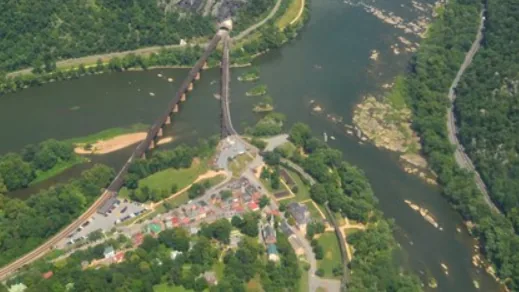
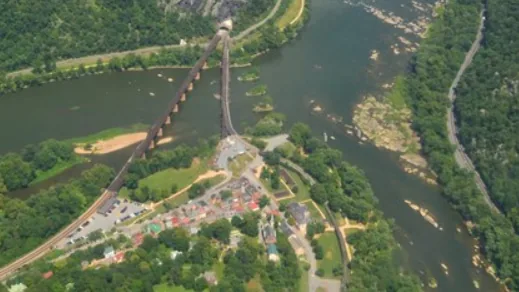
Harpers Ferry, West Virginia stands at one of the most dramatic geographic and historical crossroads in the United States. Wedged into the point where the Potomac and Shenandoah rivers converge and the Blue Ridge Mountains funnel two great waterways through a rocky gap, this small town has witnessed more pivotal American history per square mile than almost anywhere else in the country. This complete travel guide to Harpers Ferry covers everything you need to know to plan a trip in 2026 — from the history and top attractions to practical logistics, dining, hiking, and the best time to visit.
Harpers Ferry at a Glance
- Location: Jefferson County, West Virginia, at the confluence of the Potomac and Shenandoah rivers
- Distance from Washington D.C.: ~65 miles; approximately 75-90 minutes by car
- Distance from Baltimore: ~55 miles; approximately 75 minutes
- Known for: John Brown’s Raid (1859), Civil War history, Appalachian Trail, river recreation, historic lower town
- Best time to visit: Spring (April-May) and Fall (September-October)
- Park entry fee: $20/vehicle, valid 7 days (America the Beautiful pass accepted)
- Transit access: MARC Penn Line weekend service from Washington Union Station
The History of Harpers Ferry
Harpers Ferry’s history begins with Robert Harper, an English millwright who acquired the ferry rights at the river confluence in 1747 and established the river crossing that gave the town its name. The location’s strategic combination of water power and navigable rivers made it an obvious site for industry, and in 1796 President George Washington designated Harpers Ferry as the site for one of the nation’s two federal armories — a facility that would produce hundreds of thousands of rifles and muskets over the following six decades.
John Brown’s Raid, 1859
The event that put Harpers Ferry permanently in the American consciousness was the raid of October 16-18, 1859. The abolitionist John Brown led 21 men — including five Black members — in a seizure of the federal armory with the intention of triggering a slave uprising across the South. The plan failed. Brown’s forces were surrounded in the armory’s fire engine house by local militia and then by a company of U.S. Marines commanded by Colonel Robert E. Lee and Lieutenant J.E.B. Stuart — both of whom would become Confederate generals less than two years later. Brown was captured, tried for treason, and hanged in nearby Charles Town on December 2, 1859.
The raid electrified the nation. In the North, Brown was mourned as a martyr. In the South, the raid confirmed fears of abolitionist violence and hardened secessionist sentiment. Many historians mark John Brown’s Raid as the final catalyzing event on the road to the Civil War.
The Civil War
Harpers Ferry changed hands eight times during the Civil War, making it one of the most contested strategic points in the entire conflict. Its position at the junction of two rivers and the crossing point for multiple railroad lines made it a critical logistical asset for whichever army held it. The armory was destroyed in the war’s first weeks to prevent it from falling into Confederate hands intact. In September 1862, Confederate forces under Stonewall Jackson captured a Union garrison of 12,500 men at Harpers Ferry — the largest Union surrender of the war — just days before the Battle of Antietam 12 miles north.
Storer College and the Niagara Movement
After the war, Storer College was established in Harpers Ferry in 1867 as one of the first institutions of higher education open to Black Americans. In 1906, W.E.B. Du Bois brought the second meeting of the Niagara Movement — the predecessor organization to the NAACP — to Harpers Ferry, choosing the site deliberately for its symbolic resonance with John Brown’s anti-slavery legacy. The meeting at Storer College was a foundational moment in the organized civil rights movement in the United States.
Top Attractions in Harpers Ferry
Harpers Ferry National Historical Park
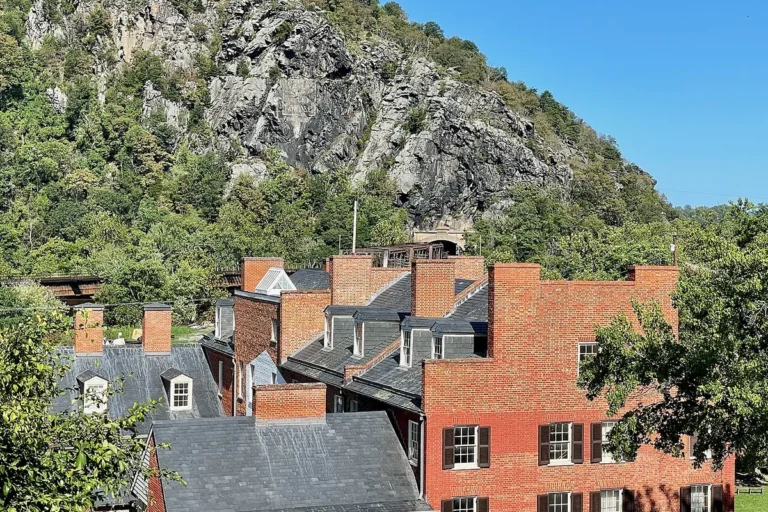
The National Historical Park covers approximately 3,700 acres including the historic lower town, the surrounding ridges and river bluffs, and significant Civil War sites. The NPS operates excellent interpretive facilities and ranger-led programs throughout the year. The lower town is the historic and experiential heart of any visit — a remarkably well-preserved 19th-century streetscape with multiple museum buildings, interpretive exhibits, and the original structures associated with John Brown’s raid.
John Brown’s Fort
The fire engine house where John Brown made his last stand is the most visited single structure in the park. It was moved twice after the Civil War before being returned to its approximate original location near the lower town in 1968. NPS rangers give regular interpretive talks at the site that are essential for understanding the full context of Brown’s raid and its historical consequences.

Jefferson Rock
The natural rock outcropping above the lower town where Thomas Jefferson stood in 1783 and declared the view worth a voyage across the Atlantic. The short but steep climb from the lower town passes historic churches and cemeteries before reaching the viewpoint overlooking the river confluence. One of the most photographed spots in West Virginia.
Maryland Heights Overlook
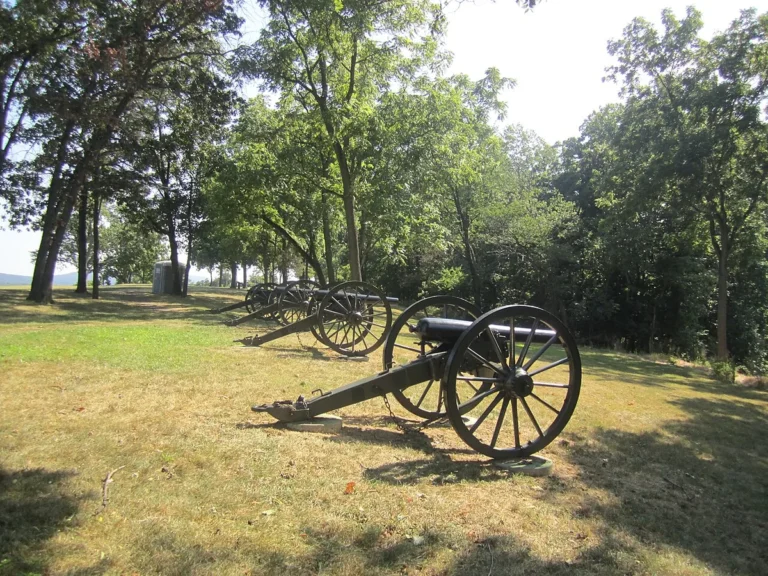
The most dramatic viewpoint in the Harpers Ferry area, accessible via a 7.5-mile round trip hike over the ridge north of the Potomac. The view looking down at the town and river confluence from the overlook is one of the great hiking views on the East Coast. Civil War artillery batteries and fortifications line the trail on the approach to the summit.
Appalachian Trail
The AT passes directly through Harpers Ferry, and the Appalachian Trail Conservancy headquarters is located in town. The stretch of trail through the area — across the railroad bridge, through the lower town, and up into the Maryland and Virginia ridges — is one of the most scenic and historically layered sections of the entire 2,190-mile trail.
Hiking Near Harpers Ferry
The Harpers Ferry area offers hiking options for every fitness level:
- Jefferson Rock Trail (easy, 0.8 miles round trip): Short but steep stone staircase climb to the iconic viewpoint above lower town
- Bolivar Heights (easy, 1-2 miles): Civil War earthworks on the ridge above Bolivar, accessible for families and casual walkers
- Loudoun Heights (moderate-strenuous, 6 miles round trip): Ridge hike south of the Shenandoah with views of the town and rivers from the Virginia side
- Maryland Heights (strenuous, 7.5 miles round trip): The signature Harpers Ferry hike with the best panoramic views; Civil War fortifications on the approach
- C&O Canal Towpath (easy, variable length): Flat path along the Maryland side of the Potomac; excellent for hiking or cycling
- Appalachian Trail (variable): Multiple sections accessible from trailheads near town
River Activities
The Potomac and Shenandoah rivers at Harpers Ferry offer outstanding water recreation from April through October:
- Kayaking and canoeing: The lower Shenandoah has Class I-II rapids accessible to paddlers of all experience levels; outfitters near town offer rentals and shuttle service
- Tubing: A popular summer activity on the Shenandoah; outfitters provide tubes, life vests, and shuttles
- Whitewater rafting: The upper Shenandoah above Harpers Ferry has Class II-III rapids; guided trips available
- Fishing: Both rivers support smallmouth bass, catfish, and various panfish; a West Virginia fishing license is required
Where to Eat Near Harpers Ferry
Dining options within Harpers Ferry itself are limited — a few casual spots and seasonal eateries in the lower town area. For a proper meal, Shepherdstown (10 miles west) is the destination. West Virginia’s oldest town has a food and drink scene built around Shepherd University, an active arts community, and local farmers and producers. Expect farm-to-table restaurants, craft beer bars, wine shops, and coffee roasters that collectively make Shepherdstown one of the better small-town dining destinations in the Mid-Atlantic region.
Charles Town (8 miles south) has a broader selection of casual dining and familiar chain restaurants for travelers prioritizing convenience over culinary adventure.

When to Visit Harpers Ferry
Spring (April to May)
Spring is exceptional in Harpers Ferry. Wildflowers bloom along the river banks and ridge trails, waterfalls in the surrounding hills run at their highest volume, and the weather is mild — typically 50 to 70 degrees with low humidity. The rivers come alive for paddling as water temperatures rise. Crowds are moderate and accommodations are available at non-peak prices. April and early May offer the best combination of comfortable conditions and manageable visitor numbers.
Summer (June to August)
Summer brings peak visitor numbers, particularly for river activities. Weather is warm to hot with typical Mid-Atlantic humidity. The lower town can feel crowded on summer weekends; arriving before 9am significantly improves the experience. River tubing and kayaking are at their most popular. The summer season also brings the Contemporary American Theater Festival to nearby Shepherdstown — an excellent reason to combine a Harpers Ferry visit with a Shepherdstown evening.
Fall (September to November)
Fall is the most spectacular season in Harpers Ferry. The foliage that frames the river confluence and coats the surrounding ridges turns brilliant red, orange, and gold — typically peaking in mid-to-late October. The views from Jefferson Rock and Maryland Heights are at their most dramatic. October is the busiest month of the year; accommodations in Harpers Ferry, Bolivar, and Shepherdstown book up quickly. Plan and book ahead for any October visit.
Winter (December to February)
Winter is the quietest season, and it rewards visitors who come prepared. The park remains open year-round, and the leafless trees actually open up views that are hidden by foliage in warmer months. The lower town has a contemplative quality in winter that is very different from the summer bustle. Ghost tours continue into the winter months. Prices are at their lowest and availability is highest. Cold-weather hiking on Maryland Heights in particular feels like having the mountain to yourself.
Getting to Harpers Ferry
By car: From Washington D.C. and Northern Virginia, take US-340 West (via I-66 West or I-270 West to US-340). From Baltimore, take I-70 West to US-340 South. Both routes are approximately 65-70 miles, taking 75 to 90 minutes in normal traffic.
By train: The MARC commuter rail Penn Line operates weekend service between Washington Union Station and Harpers Ferry. The trip takes approximately 90 minutes and costs around $10 each way. This makes Harpers Ferry one of the few national park gateway towns in the East genuinely accessible without a car — a significant advantage for DC-based visitors who want to avoid weekend driving.
Parking: The NPS visitor center at Cavalier Heights has the largest parking area. During peak season, parking in the lower town is extremely limited and a shuttle from the visitor center is the recommended approach.

Frequently Asked Questions: Harpers Ferry Travel Guide
Why is Harpers Ferry famous?
Harpers Ferry is primarily famous for John Brown’s Raid of October 1859, when the abolitionist John Brown seized the federal armory in an attempt to trigger a slave uprising. The raid failed, Brown was executed, and the event accelerated the United States toward the Civil War. The town is also known for its dramatic scenery at the river confluence, its role in the Civil War, the Appalachian Trail, and the early civil rights history associated with Storer College.
Is Harpers Ferry in West Virginia or Virginia?
Harpers Ferry is in West Virginia — specifically in Jefferson County, in the Eastern Panhandle of the state. The town sits at the point where West Virginia, Maryland, and Virginia meet, which contributes to some geographic confusion. The Potomac River forms the border between West Virginia and Maryland at this point; Virginia’s border is just south of town.
How long does it take to see Harpers Ferry?
A minimum of four hours is needed to do the lower town justice. A full day covers the lower town, Jefferson Rock, and one hike or river activity. Two days is ideal for a complete first visit that includes the Maryland Heights hike, river recreation, and unhurried time in the lower town exhibits.
Is Harpers Ferry worth visiting in winter?
Yes — winter Harpers Ferry is underrated. The absence of crowds, the atmospheric quality of the historic lower town in cold weather, the open ridge views without foliage, and the lowest accommodation prices of the year all make winter a compelling time to visit. Ghost tours continue year-round. The hikes are more challenging but rewarding in winter conditions.
Plan Your Harpers Ferry Trip
Harpers Ferry is one of those destinations that changes the way you think about American history. The physical landscape — two rivers converging, mountains rising on three sides, a town clinging to the rocky point between them — makes the history feel immediate and present rather than distant and abstract.
Come with some knowledge of John Brown, the Civil War, and the Appalachian Trail. Book accommodations in Shepherdstown or Bolivar at least a month ahead for any fall visit. Plan to spend two days. And bring hiking boots — the views from the ridges are why this place has been drawing travelers for over two centuries.

3 Comments