
Temples in Chiang Mai: The Complete Guide to Every Must-See Wat (2026)
Temples in Chiang Mai — known as “wats” in Thai — number more than 300 within the city limits, reflecting Chiang Mai’s 700 years as the capital of the Lanna Kingdom and its continued importance as a centre of Buddhist culture in northern Thailand. The oldest temples date to the 13th century; many are still active monasteries with resident monks. The most important temples are concentrated in and around the Old City moat, with Doi Suthep temple crowning the mountain above the city. This guide covers every significant temple worth visiting, with opening times, entry fees, and insider tips for 2026.
For trip planning context, see the Chiang Mai Travel Guide and our 3-Day Chiang Mai Itinerary. For the full attraction list beyond temples, read Best Things to Do in Chiang Mai.
Temple Visiting Etiquette in Chiang Mai
Before visiting any temple in Chiang Mai, note these rules — breaking them causes genuine offence to local worshippers and resident monks:
- Dress modestly: Cover shoulders and knees at all times inside temple grounds. Sleeveless tops, shorts, and short skirts are not permitted. Most major temples sell or lend sarongs at the gate (20–50 THB deposit)
- Remove footwear: Take off shoes before entering any temple building (viharn or ubosot). Sandals are easier than lace-up shoes for a temple-heavy day
- Sit with feet pointing away from Buddha images: Feet are considered the lowest part of the body in Thai culture; pointing them at a Buddha image is disrespectful
- Women and monks: Women must not touch monks or hand objects directly to them; place items on a cloth or table nearby
- Keep voices low: Temples are active places of worship; many people are genuinely praying or meditating
- Photography: Generally permitted in temple grounds but check signs inside main chapel buildings
The Essential Chiang Mai Temple Circuit
1. Doi Suthep (Wat Phra That Doi Suthep) — Most Sacred
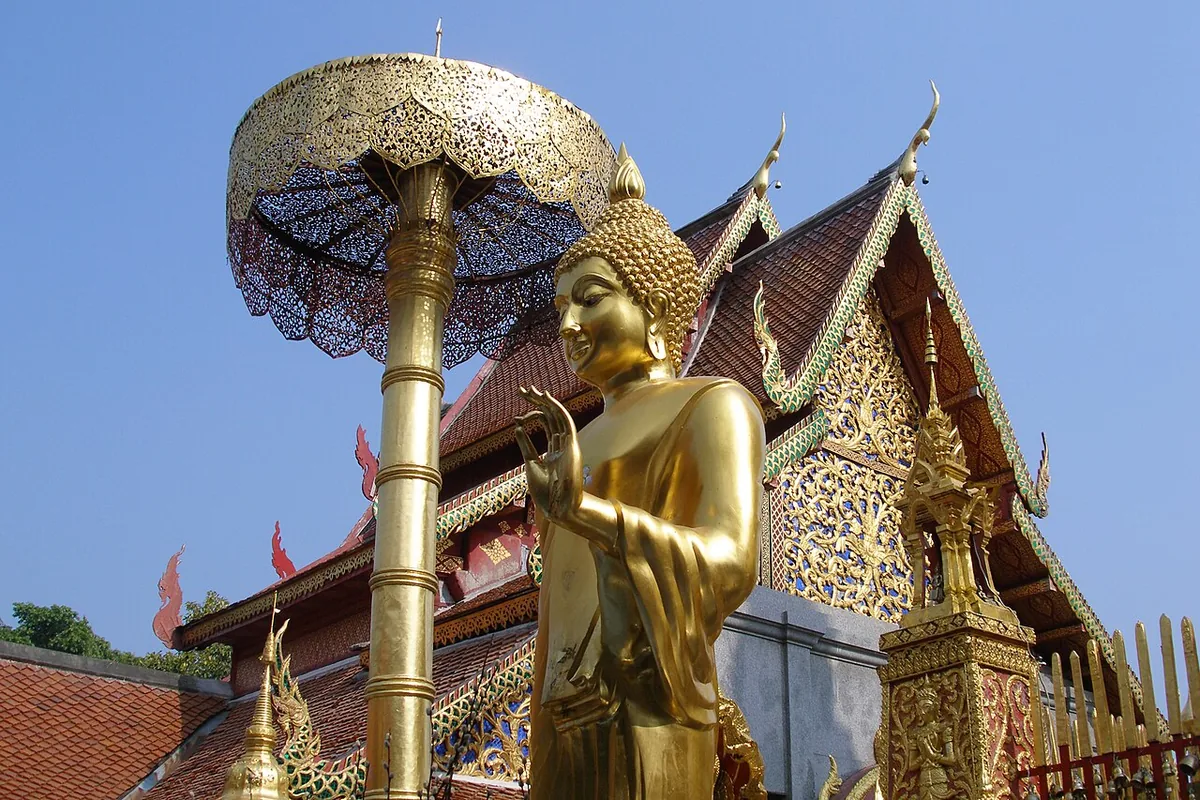
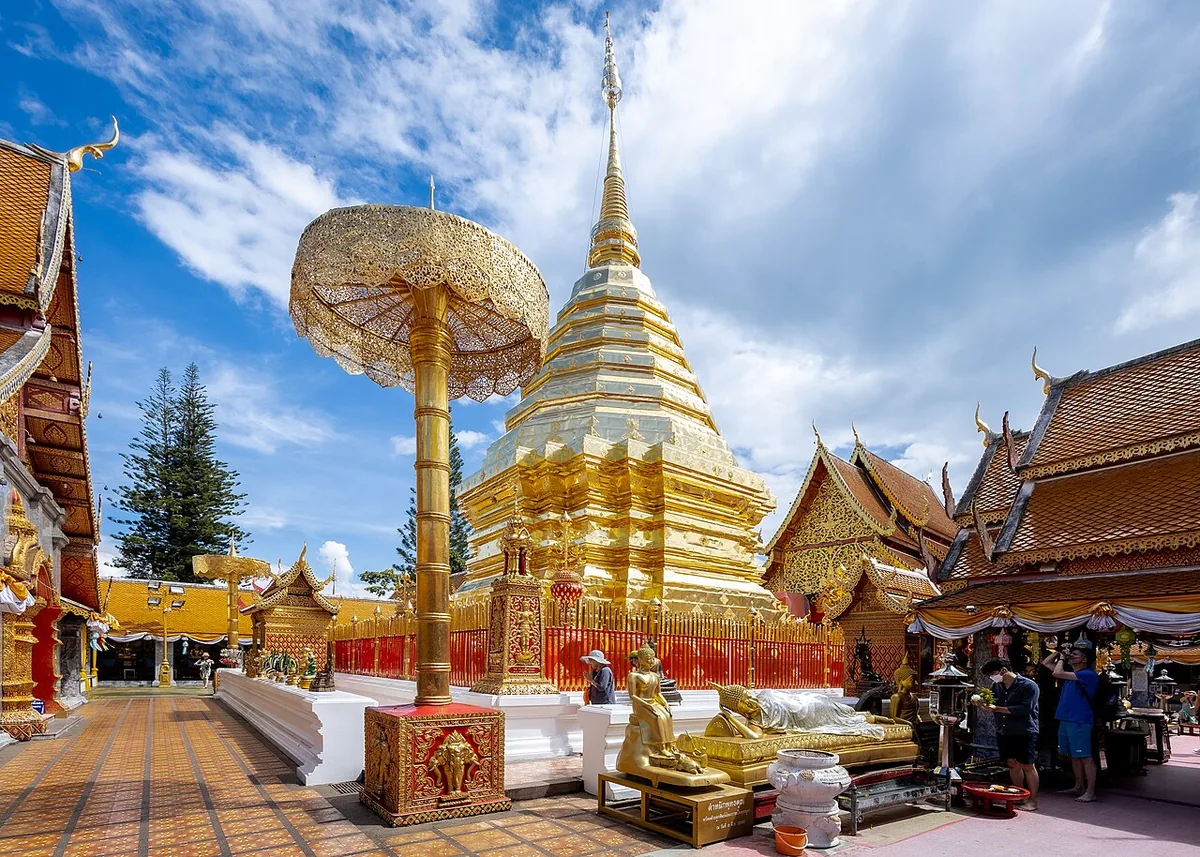
Doi Suthep is the most important and most visited temple in Chiang Mai — a golden hilltop wat at 1,073 metres on Doi Suthep mountain, 15 kilometres from the city centre. Built in 1383 to house a relic of the Buddha (said to have miraculously duplicated itself and been carried to the mountain by a white elephant that died on this spot), the temple is the spiritual heart of northern Thailand. The main chedi is covered in gilded copper and surrounded by smaller shrines, bells, and monks’ quarters. The 309-step Naga staircase leading up to the complex is guarded by serpent balustrades on both sides.
- Entry: 30 THB for foreign visitors
- Hours: Daily 6:00 AM–7:00 PM
- Getting there: Red songthaew from Nimman Road: 50–60 THB per person each way | Private taxi: 300–400 THB return | Hike via Monk’s Trail: 4.5 km, 1.5 hours
- Best time: Before 9:00 AM (sunrise) or after 4:00 PM to avoid tour groups
- Allow: 1.5–2 hours including travel time from the city
2. Wat Chedi Luang — Most Atmospheric
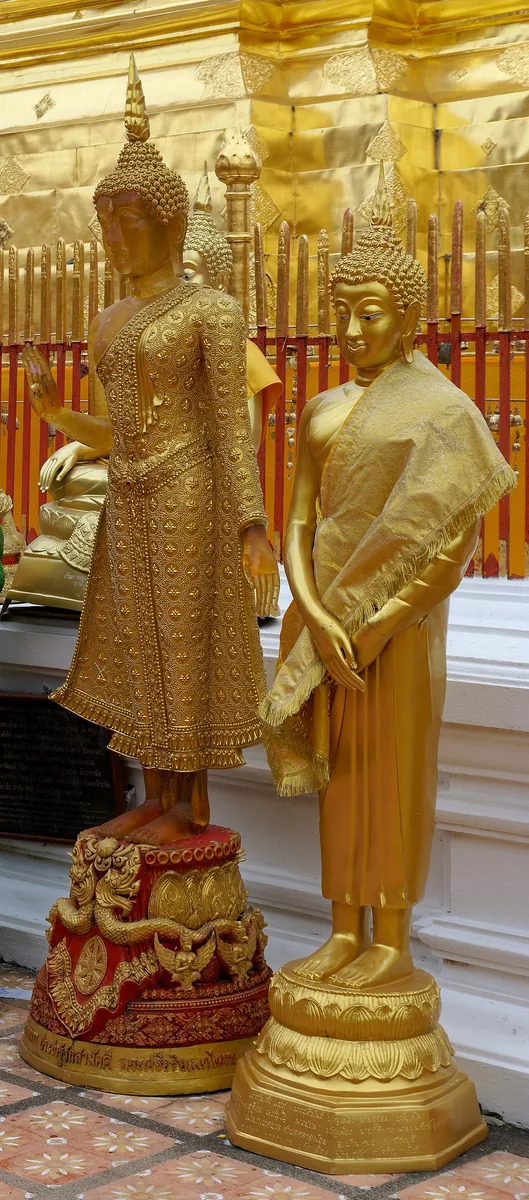
Wat Chedi Luang (“Temple of the Great Stupa”) is the most dramatically atmospheric temple in the Old City. Founded in 1391, its central chedi once stood 82 metres tall — the tallest structure in the Lanna Kingdom. An earthquake in 1545 and subsequent neglect reduced it to the imposing partial ruin visible today: around 60 metres of crumbling brick, covered in elephant buttresses, with nagas framing the stairways. The Emerald Buddha (Thailand’s most sacred image, now in Bangkok) was housed here from 1475 to 1768. A replica now stands in the eastern niche.
- Entry: 40 THB
- Hours: Daily 6:00 AM–8:00 PM
- Don’t miss: The monk chat programme — every afternoon, novice and senior monks sit with visitors for open conversation (free, by donation)
- Allow: 45–60 minutes
3. Wat Phra Singh — Most Revered Inside the Old City
Wat Phra Singh (“Temple of the Lion Buddha”) is the most revered active temple within the Old City moat. Founded in 1345, it houses the Phra Singh Buddha image — one of northern Thailand’s most sacred images — in the Wihan Lai Kham, a beautifully decorated wooden building painted with intricate murals depicting Lanna life in the 19th century. The temple receives the Phra Singh image procession during Songkran (Thai New Year, April) when it is carried through the streets for people to pay respects.
- Entry: 40 THB
- Hours: Daily 6:00 AM–6:00 PM
- Best feature: The Wihan Lai Kham murals — the finest example of Lanna Buddhist temple painting
- Allow: 45 minutes
4. Wat Chiang Man — Oldest in the City
Wat Chiang Man is the oldest temple in Chiang Mai, built in 1297 by King Mangrai when he founded the city. The temple contains two highly venerated Buddha images: the Phra Sila (a crystal Buddha relief in Indian style, believed to be 2,500 years old) and the Phra Satang Man (a marble Buddha image, believed to be 1,800 years old). The main chedi is supported by 15 stone elephant buttresses — a classic Lanna architectural feature. The temple grounds are relatively quiet and less visited than Wat Chedi Luang, making it one of the most peaceful in the Old City.
- Entry: Free (donations welcome)
- Hours: Daily 8:00 AM–5:00 PM
- Allow: 30 minutes
5. Wat Phan Tao — Most Beautiful Teak Temple
Wat Phan Tao is directly adjacent to Wat Chedi Luang and is one of Chiang Mai’s most visually striking temples. The main viharn is built entirely of teak — 28 massive columns of carved teak support a sweeping multi-tiered roof. The interior is dark and atmospheric, lit by filtered light through carved wooden screens, with a collection of antique Buddha images inside. During Loy Krathong (full moon in November), the courtyard of Wat Phan Tao is lit with thousands of candles and paper lanterns in one of Chiang Mai’s most beautiful evening events.
- Entry: 20 THB
- Hours: Daily 8:00 AM–5:00 PM
- Best time: Loy Krathong festival (November full moon) — the most atmospheric night of the year at this temple
- Allow: 30 minutes
Beyond the Old City: More Temples Worth Visiting
Wat Umong — Forest Meditation Temple
Wat Umong is a 14th-century forest temple 2 kilometres southwest of the Old City, built around a network of underground tunnels (umong means “tunnel” in Thai). The tunnels contain Buddha images and meditation alcoves; the forested grounds above have a pond, grazing deer, and a tall ruined chedi. It remains an active meditation centre; monks live on the grounds. The peaceful forest atmosphere makes it unlike any other temple in Chiang Mai.
- Entry: Free (donations welcome)
- Hours: Daily 8:00 AM–5:00 PM
- Getting there: Tuk-tuk or songthaew (30–50 THB); not easily walkable from Old City
Wat Suan Dok — Temple of the Flower Garden
Wat Suan Dok was established in 1373 when the king gave his royal flower garden to a forest monk. The complex contains a large open chedi and a collection of smaller white chedis holding the ashes of Chiang Mai’s royal family — highly photogenic against the mountain backdrop at sunset. Like Wat Chedi Luang, it runs a popular Monk Chat programme on Monday, Wednesday, and Friday evenings (5:00–7:00 PM).
- Entry: Free
- Hours: Daily 6:00 AM–6:00 PM
Wat Phra That Doi Kham — Hilltop Temple South of the City
Less visited than Doi Suthep but equally rewarding, Wat Doi Kham sits on a forested hill south of Chiang Mai with a large golden Buddha visible from the approach road. The giant 17-metre seated Buddha at the base of the hill is one of the largest in northern Thailand. The temple receives mostly local Thai worshippers rather than tourists — the atmosphere is noticeably more authentic than the main tourist circuit.
- Entry: Free
- Getting there: Songthaew or tuk-tuk from Old City (30–40 min)
One-Day Temple Itinerary in Chiang Mai
If you have one full day for temples, this order works well:
- 7:30 AM: Doi Suthep (arrive early; take songthaew up, hike Monk’s Trail down)
- 11:00 AM: Wat Chedi Luang (monk chat at midday)
- 12:00 PM: Lunch near Old City
- 1:30 PM: Wat Phra Singh
- 2:30 PM: Wat Phan Tao (next door to Wat Chedi Luang)
- 3:30 PM: Wat Chiang Man
- 5:00 PM: Wat Suan Dok (monk chat if available; sunset over chedis)
Frequently Asked Questions
How many temples are there in Chiang Mai?
Chiang Mai has more than 300 temples (wats) within the city and surrounding area, making it the most temple-dense city in Thailand. The oldest date to the 13th century when King Mangrai founded the city in 1296. The most important for visitors are Doi Suthep, Wat Chedi Luang, Wat Phra Singh, Wat Chiang Man, and Wat Phan Tao.

Do you have to pay to enter temples in Chiang Mai?
Most major temples in Chiang Mai charge foreign visitors a small entry fee of 20–50 THB (roughly £0.45–£1.15). Thai nationals enter for free. A few temples — including Wat Chiang Man, Wat Suan Dok, and Wat Umong — are free for all visitors. Doi Suthep charges 30 THB. The combined cost of visiting all major temples in a day rarely exceeds 200–250 THB (around £5).
What should I wear to visit temples in Chiang Mai?
Cover your shoulders and knees at all temples in Chiang Mai. Lightweight linen or cotton trousers and a t-shirt are sufficient in the cool season; a light scarf doubles as a shoulder cover and weighs almost nothing in a day bag. Most major temples sell or lend sarongs at the entrance gate (20–50 THB deposit or purchase) for visitors caught without appropriate clothing.
What is the most beautiful temple in Chiang Mai?
Doi Suthep is the most impressive overall — its golden chedi on a mountain above the city is an extraordinary sight. Wat Phan Tao is considered the most beautiful in purely architectural terms, with its complete teak viharn and candlelit courtyard during Loy Krathong. Wat Chedi Luang is the most atmospheric. Most visitors agree that the combination of all three provides the complete Chiang Mai temple experience.
Ready to plan your temple day? See our 3-Day Chiang Mai Itinerary for how to fit the temple circuit into a full visit, and read Best Things to Do in Chiang Mai for everything else the city offers.




2 Comments