

Best Things to Do in Canterbury: Top Attractions (2026)
The best things to do in Canterbury, England centre on one of the most historically dense cities in Britain — a UNESCO World Heritage Site containing the mother church of the worldwide Anglican Communion, the oldest church in continuous use in England, a Roman town house mosaic still visible beneath modern streets, and a medieval street plan that Chaucer’s pilgrims would still recognise. Canterbury is a compact city of approximately 55,000 people in Kent, 62 miles southeast of London, built on over 2,000 years of continuous settlement. It receives approximately 7.8 million visitors annually — making it one of the most visited cities in England outside London — drawn primarily by the cathedral but rewarded by much more than a single building.
For a full trip overview, read our Canterbury Travel Guide. For a day-by-day plan, see our 2 Days in Canterbury Itinerary.
Top Things to Do in Canterbury
1. Canterbury Cathedral
Canterbury Cathedral is the most significant Gothic church in England and one of the most important Christian pilgrimage sites in the world. Founded in 597 AD by St Augustine — sent from Rome by Pope Gregory the Great to convert the Anglo-Saxons — the cathedral has been the seat of the Archbishop of Canterbury (the most senior bishop of the Church of England and spiritual leader of the 85 million-member Anglican Communion) for over 1,400 years. The current building is primarily Norman and Perpendicular Gothic, built between 1070 and 1505.
The cathedral’s most significant moment came on 29 December 1170, when Archbishop Thomas Becket was murdered in the north transept by four knights — an act that shocked medieval Christendom, led to Henry II’s public penance, and transformed Canterbury into one of the most visited pilgrimage destinations in Europe within decades. Becket was canonised in 1173; his shrine attracted pilgrims from across Europe until Henry VIII ordered its destruction in 1538. Admission is £16.50 for adults; free for worshippers at services. The cathedral is a UNESCO World Heritage Site. Allow 2 hours minimum.
2. St Augustine’s Abbey
St Augustine’s Abbey (Longport), founded in 598 AD just outside the city walls, was established as the burial place of the first Archbishops of Canterbury and the Kentish royal family — making it older than the cathedral itself. The abbey became one of the most powerful Benedictine monasteries in England before Henry VIII dissolved it in 1538; the ruins cover a large site and include the footprint of the original Anglo-Saxon church, the Norman abbey church, and later medieval additions. Managed by English Heritage with an excellent audio tour. Admission is £8.90. A UNESCO World Heritage Site. Allow 1 hour.


3. St Martin’s Church
St Martin’s Church (North Holmes Road) is the oldest church in continuous use in England. Parts of the south wall of the nave use Roman brick from the 4th century, and the church served as the private chapel of Queen Bertha — the Frankish Christian wife of the pagan King Ethelbert of Kent — before St Augustine’s arrival in 597 AD. It is the third element of Canterbury’s UNESCO World Heritage inscription (alongside the cathedral and the abbey). Free entry on open days (Tuesday, Thursday, Saturday mornings, and Sunday afternoons). The churchyard, with its ancient yew trees and worn medieval grave slabs, is among the most atmospheric in England.
4. Westgate Towers
Westgate Towers (St Peter’s Street) is the largest surviving medieval city gateway in England — a pair of D-shaped drum towers in Kentish ragstone built in 1380 under Archbishop Simon of Sudbury. The towers straddle the main western approach to the city along the old Roman road and served as the city prison from the 15th through the 19th century. The gateway now houses a small free museum on weekend openings. Even without entering, the Westgate frames the view along St Peter’s Street in both directions and is the most photographed architectural element in Canterbury after the cathedral itself.
5. Canterbury Roman Museum
The Canterbury Roman Museum (Butchery Lane) is built around in-situ Roman remains — most notably a preserved mosaic floor from a 1st–2nd century Roman town house, displayed at its original underground level beneath modern Canterbury. The museum covers the Roman history of Durovernum Cantiacorum (the Roman name for Canterbury) as a significant commercial centre on the road from the Channel ports to London. Displays include pottery, coins, jewellery, and reconstructed room interiors. Admission is £7.50 for adults. A compact but rewarding 45-minute visit.
6. River Stour Punting
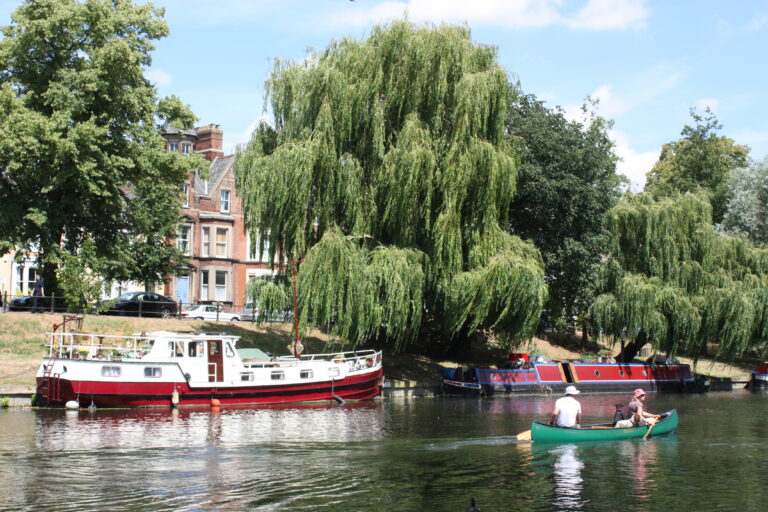
Canterbury Historic River Tours operate 40-minute guided punting tours on the River Stour from the King’s Bridge (behind the Beaney on High Street), running from March through October. The route passes through the historic heart of the city — the backs of the cathedral precincts, the medieval Weaver’s House buildings occupied by Huguenot refugees in the 16th and 17th centuries, and under the Greyfriars Chapel on its island between two streams. The Greyfriars Chapel (c.1267) is the earliest surviving Franciscan building in England and remarkably atmospheric when seen from the water. Tours cost approximately £12–£14 per person. One of the most distinctive Canterbury experiences and a genuine highlight of a two-day visit.

7. Beaney House of Art and Knowledge
The Beaney (18 High Street) is Canterbury’s free public museum and library — a Victorian Gothic building housing collections that cover the city’s history from the Palaeolithic through the 20th century, alongside a natural history gallery, fine art, and temporary exhibitions. The Rupert Bear Gallery (Rupert Bear was created by Canterbury-born author Mary Tourtel in 1920) appeals particularly to families. Free entry. A reliable wet-weather option and a surprisingly rich collection for a city of Canterbury’s size. Allow 1 hour.
8. The Canterbury Tales Visitor Attraction
The Canterbury Tales attraction (St Margaret’s Street) recreates five of Geoffrey Chaucer’s late-14th century tales using life-size figures, recorded narration, and period settings inside a medieval church building. The tales depicted — the Knight’s, Miller’s, Wife of Bath’s, Franklin’s, and Pardoner’s Tales — are among the most entertaining in the collection. The format is accessible and designed for general audiences rather than literary specialists. Admission is £14.50 for adults; a family ticket is available. A 45-minute experience that provides genuine context for understanding why Canterbury drew tens of thousands of pilgrims annually in the medieval period.
9. Dane John Gardens and the City Walls
Dane John Gardens is a public park on the south side of the city centre containing the Dane John Mound — a Norman earthwork that may have been the motte of a very early castle. The mound offers the best elevated views of the city’s rooflines and the cathedral towers above the medieval street plan. The adjacent section of the Canterbury City Walls is the best-preserved stretch of the circuit — the walls follow the original Roman line, significantly widened and heightened in the medieval period, and offer a flat walkway along the top of part of the circuit. Free. A 30-minute circuit covers the best section.
10. Independent Dining and The Goods Shed
The Goods Shed (Station Road West) is Canterbury’s most distinctive food experience — a daily farmers market and restaurant operating inside a Victorian railway goods shed beside Canterbury West station. Producers sell Kent vegetables, meat, fish, cheese, and bread from individual stalls; the restaurant above the market floor serves a seasonal menu built from what is available on the stalls that day. The combination of market atmosphere and quality cooking is unlike anything else in the southeast of England outside London. Open Tuesday through Sunday. Budget £30–£45 for dinner.
Canterbury Attractions: At a Glance
| Attraction | Cost | Time Needed | UNESCO? |
|---|---|---|---|
| Canterbury Cathedral | £16.50 adult | 2+ hours | Yes |
| St Augustine’s Abbey | £8.90 adult | 1 hour | Yes |
| St Martin’s Church | Free | 30 minutes | Yes |
| Westgate Towers | Free | 30 minutes | No |
| Canterbury Roman Museum | £7.50 adult | 45 minutes | No |
| River Stour Punting | £12–£14 adult | 40 minutes | No |
| Beaney House | Free | 1 hour | No |
| The Canterbury Tales | £14.50 adult | 45 minutes | No |
| Dane John Gardens + Walls | Free | 30 minutes | No |
| The Goods Shed | £30–£45 dinner | 1.5 hours | No |
Frequently Asked Questions
What is Canterbury best known for?
Canterbury is best known for Canterbury Cathedral — the seat of the Archbishop of Canterbury, the spiritual leader of the Anglican Communion, and a UNESCO World Heritage Site. It is also known for the murder of Archbishop Thomas Becket in 1170 and for Geoffrey Chaucer’s 14th-century literary masterpiece The Canterbury Tales, which depicts pilgrims travelling to Becket’s shrine.
Is Canterbury worth visiting for a day?
Yes — a single day covers the cathedral, St Augustine’s Abbey, the Roman Museum, and a river punt comfortably if you start early. Two days allows for all three UNESCO sites, the Westgate Towers, independent dining, and a more relaxed pace. See our 2 Days in Canterbury Itinerary for a full plan.
What are the best day trips from Canterbury?
The best day trips from Canterbury are Whitstable (7 miles, oysters and seafood), Margate (18 miles, Turner Contemporary gallery and Dreamland), and Dover (16 miles, White Cliffs and Dover Castle). See our full Canterbury Day Trip Guide for distances, drive times, and what to see at each.
Plan your days with our 2 Days in Canterbury Itinerary, find your hotel in Where to Stay in Canterbury, and explore the region with our Canterbury Day Trip Guide.

One Comment