3 Days in Sedona: The Perfect Itinerary for First-Time Visitors (2026)
Three days in Sedona is enough to hike two or three signature trails, visit all four energy vortex sites, explore Uptown’s galleries, and still catch a legendary Arizona sunset over the red rocks. This itinerary is built for first-time visitors who want to see the highlights without feeling rushed.
Best time to visit: March–May and September–November offer mild temperatures (60–80°F) and fewer crowds. Summer highs regularly hit 100°F, and popular trailheads fill by 7 a.m. year-round.
Day 1: Arrive, Explore Uptown, and Catch Sunset at Airport Mesa
Morning: Drive in and get oriented
Sedona sits 2 hours north of Phoenix Sky Harbor Airport via AZ-179, one of the most scenic drives in the American Southwest. If you’re flying in, pick up your rental car and stop at the Sedona Visitor Center on Forest Road for free trail maps, parking permits, and insider tips from rangers.
The Red Rock Pass costs $5 per day and is required at most trailheads and picnic areas. Buy it at the visitor center or at self-pay stations on-site.
Afternoon: Cathedral Rock
Cathedral Rock is Sedona’s most-photographed landmark and one of the four designated energy vortex sites. The out-and-back trail to the saddle is only 1.5 miles round trip, but the final 0.3 miles involves Class 3 scrambling on slick sandstone. Wear trail running shoes or hiking boots — no flip-flops.
- Distance: 1.5 miles round trip
- Elevation gain: 742 feet
- Difficulty: Moderate to difficult
- Trailhead: Back O’ Beyond Trailhead, 60 Back O’ Beyond Rd
After the hike, cool off at Red Rock Crossing, a shallow stretch of Oak Creek where Cathedral Rock reflects perfectly in the water. It’s one of the most iconic photo spots in Arizona.
Evening: Sunset at Airport Mesa Vortex
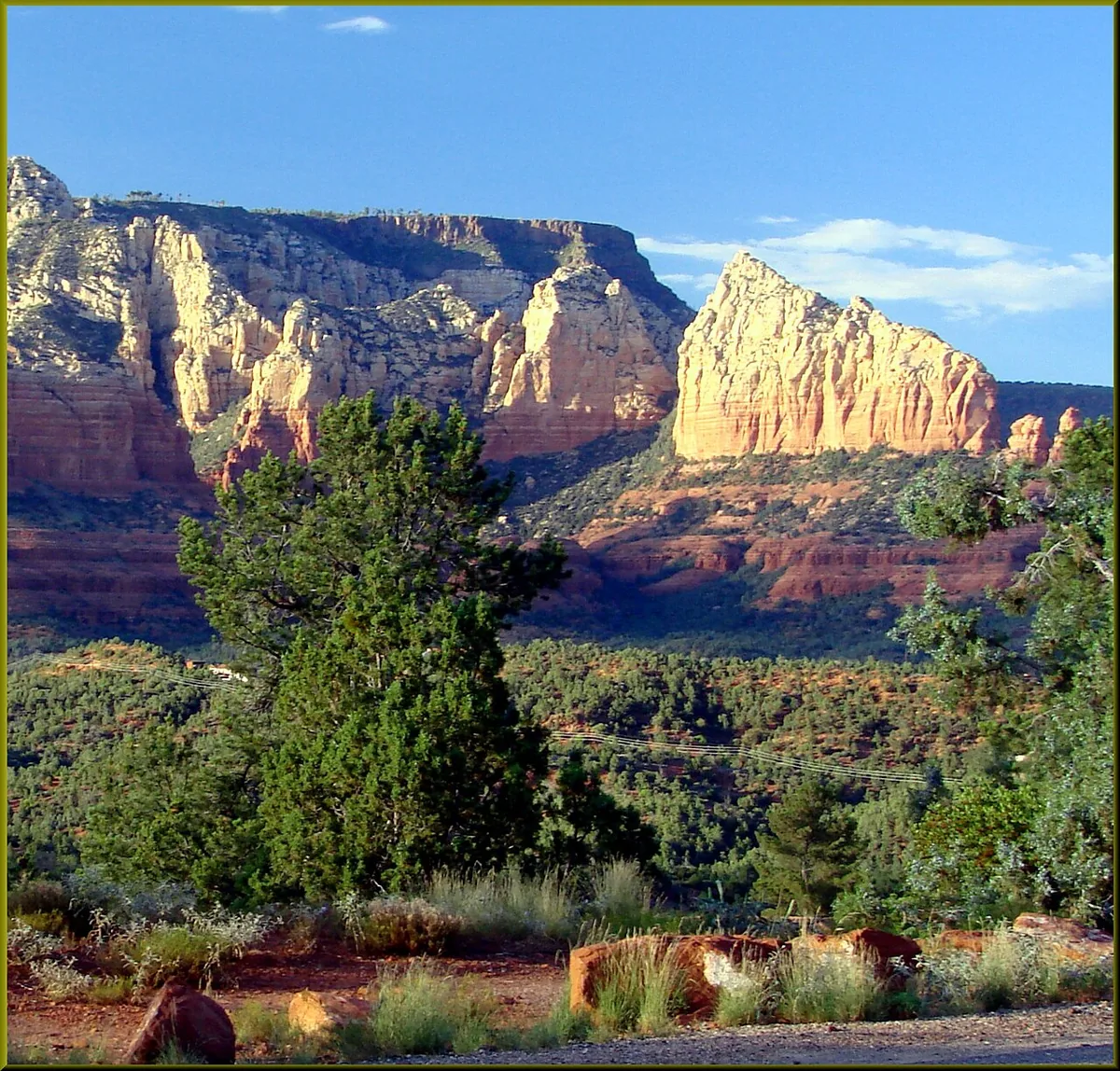
Airport Mesa offers a 360-degree panorama of Sedona from 4,500 feet elevation. Arrive 45 minutes before sunset to claim a spot on the rocky overlook. The vortex here is described as an upflow site — visitors often report feeling energized rather than grounded.

Dinner recommendation: Elote Cafe (open Tuesday–Sunday, no reservations — arrive early to add your name to the list). Their elote and short rib dishes are worth the wait.
Day 2: Devil’s Bridge, Boynton Canyon Vortex, and Tlaquepaque
Morning: Devil’s Bridge Trail
Devil’s Bridge is the largest natural sandstone arch in the Sedona area, and the hike to stand on it is one of the most rewarding in Arizona. The trail is 4 miles round trip with 400 feet of elevation gain — manageable for most fitness levels.
- Distance: 4 miles round trip
- Elevation gain: 400 feet
- Difficulty: Moderate
- Trailhead: Dry Creek Road trailhead (free) or Chuckwagon trailhead (requires Red Rock Pass)
Pro tip: Start by 7:30 a.m. to avoid crowds and wait times at the arch itself. By 10 a.m., you may queue 20+ minutes for your photo on the bridge.
Midday: Boynton Canyon Vortex
Boynton Canyon is considered a balanced vortex — a combination of masculine (electric) and feminine (magnetic) energy. The canyon hike is 6 miles round trip and passes through towering red walls and ponderosa pines. The vortex marker is at mile 0.8, just before a large juniper tree growing from the canyon wall.
Grab lunch at Boynton Canyon Trailhead picnic area or head back toward West Sedona for tacos at Tortas de Fuego — a cash-only spot locals swear by.
Afternoon: Tlaquepaque Arts and Shopping Village
Tlaquepaque (pronounced tla-KAH-keh-KAH) is a 1970s arts village modeled after a Mexican hacienda. It houses 40+ galleries, boutiques, and restaurants under sycamore trees alongside Oak Creek. Even if you don’t buy anything, it’s worth an hour for the architecture and free gallery browsing.

Don’t miss: Kuivato Glass Gallery for hand-blown glass and Scarlett’s for Sedona-made jewelry.
Evening: Bell Rock at Dusk
Bell Rock glows an intense amber-orange in the last hour of daylight. The base trail is completely flat and only 0.6 miles, making it accessible for all ages. Sit on the lower rock formations and watch the color shift as the sun drops — no hiking required to experience this vortex.
Day 3: West Fork Trail, Slide Rock, and Departure
Morning: West Fork of Oak Creek Canyon
West Fork is consistently rated one of the top 10 hikes in Arizona. The trail follows a creek through a red-walled canyon, crossing the water 13 times in the first 3 miles. The canyon narrows dramatically at mile 3, where the walls rise 200 feet overhead.
- Distance: 6 miles round trip (go as far as you like)
- Difficulty: Easy to moderate
- Best for: Fall foliage (October), wildflowers (April–May)
- Parking: Call of the Canyon Day Use Area, $12 per vehicle
Late Morning: Slide Rock State Park
Slide Rock is a natural water park carved by Oak Creek — a 30-foot algae-slicked chute that ends in a cold swimming hole. The park opens at 8 a.m. and hits capacity quickly on summer weekends. Entry is $30 per vehicle (up to 4 passengers).
The water temperature averages 55–65°F even in summer, so bring a towel and be prepared for cold. Water shoes are recommended — the creek bottom is slippery.
Afternoon: Departure or Jerome Day Trip
If you have an evening flight, use your final afternoon to visit Jerome — a former copper mining town perched on Cleopatra Hill, 45 minutes from Sedona. The town has art galleries, wine tasting rooms, and a ghost town atmosphere that’s unlike anything in the Sedona area.
For Phoenix airport, allow 2.5 hours drive time plus 90 minutes for security and boarding.
3-Day Sedona Itinerary: Quick Reference
| Day | Morning | Afternoon | Evening |
|---|---|---|---|
| Day 1 | Arrive + Visitor Center | Cathedral Rock + Red Rock Crossing | Airport Mesa Sunset + Elote Cafe |
| Day 2 | Devil’s Bridge Trail | Boynton Canyon + Tlaquepaque | Bell Rock at dusk |
| Day 3 | West Fork Trail | Slide Rock State Park | Jerome or depart |
Practical Tips for 3 Days in Sedona
- Book accommodation 3–6 months ahead for peak season (March–May). Sedona has fewer than 3,000 hotel rooms and prices spike on weekends.
- Download the Sedona Trail Finder app before you arrive — it works offline and shows real-time trailhead parking availability.
- Hydrate constantly: Sedona sits at 4,350 feet elevation. Drink 2–3 liters of water per day, even on easy trails.
- Red Rock Pass vs. America the Beautiful Pass: If you already have an America the Beautiful National Parks Pass, it covers all Red Rock Pass areas for free.
Frequently Asked Questions About 3 Days in Sedona
Is 3 days in Sedona enough?
Three days in Sedona is enough time to see the top attractions — all four vortex sites, two or three signature hikes, and Uptown. To add Oak Creek Canyon, Jerome, or the Verde Valley wine region, extend your trip to 4–5 days.
What is the best time of year to visit Sedona?
The best time to visit Sedona is March to May or September to November, when temperatures range from 60–80°F and crowds are lighter than summer. October is especially popular for fall colors in Oak Creek Canyon.
Do you need a car in Sedona?
Yes. Sedona has no public transit and most trailheads are spread across a wide area. A rental car is essential. The Sedona Shuttle runs a limited route in Uptown, but it won’t get you to West Fork or Boynton Canyon.
How much does 3 days in Sedona cost?
Budget around $150–$200 per person per day for a mid-range trip: $100–$250/night for hotels, $15–$25 per meal, and $5–$30 for park fees. A jeep tour or helicopter flight adds $100–$200 per person.
What should I pack for Sedona?
Pack trail shoes or hiking boots, sunscreen (SPF 50+), a hat, at least 3 liters of water capacity per person, layers for cool mornings and evenings, and a camera or phone with extra storage. The red rocks are incredibly photogenic at sunrise and sunset.