

Best Things to Do in Chester: Top Attractions (2026)
The best things to do in Chester, England combine walking the most complete set of Roman city walls in Britain, browsing two-level medieval shopping galleries found nowhere else in the world, exploring a Norman cathedral with the finest medieval choir stalls in northwest England, cruising the River Dee past ancient weirs and watermills, and visiting one of the UK’s most celebrated zoos in a city whose street plan has been essentially unchanged since a Roman legion laid it out in the 1st century AD. Chester is a cathedral and county city in Cheshire, northwest England, with approximately 120,000 residents — compact enough to explore entirely on foot and layered enough to reward two or three days of unhurried exploration.
For a full trip overview, start with our Chester Travel Guide. For a day-by-day plan, use our Chester Itinerary.
Top Things to Do in Chester
1. Walk the City Walls
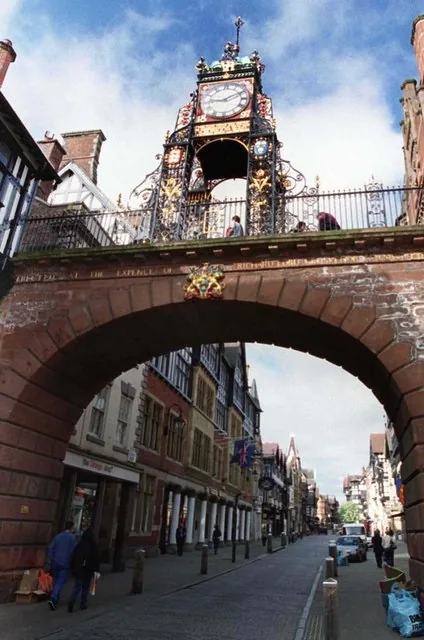
Chester’s City Walls are the defining Chester experience and the most important Roman monument in Britain outside Hadrian’s Wall. The 2-mile circuit follows the original Roman fortress perimeter of Deva Victrix, built for the 20th Legion (Legio XX Valeria Victrix) in the 70s AD, substantially rebuilt in stone in the 2nd century, and further strengthened in the medieval period. The walls survive to their full height around most of the circuit — a raised walkway running above street level with views over the city centre, the Cathedral towers, the River Dee, the Welsh hills, and the Roodee Racecourse. Free to walk at all times. The circuit takes 1.5–2 hours at a comfortable pace with stops at the towers and gates. The Eastgate Clock (1899, the second most photographed clock in England after Big Ben), King Charles Tower, and the views from the Bridgegate above the Old Dee Bridge are the unmissable stopping points.
2. Explore The Rows
The Rows are Chester’s most architecturally unique feature and have no equivalent anywhere else in the world. They are covered first-floor galleries running above ground-level shops along Chester’s four main streets — Eastgate Street, Northgate Street, Watergate Street, and Bridge Street (the original Roman roads). Shoppers access the upper-level gallery via steps at intervals, walking along a continuous covered arcade with shops on both the gallery level and the street below. The galleries are partly open-sided and partly enclosed within medieval and Victorian buildings. The origin of The Rows remains debated; the most widely accepted theory is that they developed in the 13th century as buildings were constructed over the rubble of collapsed Roman structures, creating a raised street level on one side of the original Roman roads. Exploring The Rows is free — simply walk the four main streets and take any staircase to the upper level. The best examples of the medieval timber-framed buildings within The Rows are on Bridge Street and Watergate Street.
3. Chester Cathedral
Chester Cathedral occupies the northeast quarter of the walled city on St Werburgh Street. Founded as a Benedictine abbey by Hugh Lupus (nephew of William the Conqueror) in 1092 on the site of an earlier Anglo-Saxon minster, it became a cathedral in 1541 when Henry VIII dissolved the monasteries and created the Diocese of Chester. The building is architecturally heterogeneous — Norman nave arcades, Early English choir, and Perpendicular Gothic tower — but the 14th-century choir stalls are universally regarded as the standout element: 48 stalls with elaborately carved misericords (tip-up seat supports) depicting animals, wrestlers, biblical scenes, and comic grotesques. The Refectory — the monks’ dining hall with its stone pulpit and Norman undercroft — doubles as a cathedral café, making it one of the most atmospheric lunch venues in the northwest of England. Entry by suggested donation (£5). Allow 1.5 hours.

4. Chester Zoo
Chester Zoo, 2 miles north of the city centre in Upton-by-Chester, is one of the most visited attractions in the United Kingdom outside London — approximately 1.9 million visitors annually. The 128-acre site houses over 35,000 animals across more than 500 species, with a strong focus on endangered species conservation. The zoo operates the largest conservation breeding programme in Europe and has been instrumental in the recovery of several species from the brink of extinction. Recent highlights include the Realm of the Red Ape (orangutan and gibbon), Secrets of the Forest (Sumatran species), and the Islands (six Southeast Asian island habitats connected by waterways). Entry £25–£32 per adult (cheaper booked online in advance). Allow a minimum of 4 hours. A free shuttle bus connects the city centre to the zoo entrance in peak season.
5. Roman Amphitheatre and Dewa Roman Experience
The Roman Amphitheatre (Vicars Lane, south of the city walls) is the largest Roman amphitheatre ever excavated in Britain — estimated capacity 8,000 spectators, serving both the garrison of 6,000 soldiers and the civilian population of Deva. Only the northern half has been excavated; the southern half remains beneath a Grade I listed convent. The visible remains — outer wall sections, entrance tunnel, and arena floor — give a clear impression of scale. Free to visit. The adjacent Dewa Roman Experience (Pierpoint Lane) recreates the sights, sounds, and smells of Roman Chester through a walkthrough museum with a recreated Roman street, a working galley deck, and genuine archaeological finds including the original floor timbers of a Roman ship recovered from the Dee. Admission £7.95. Allow 1 hour.
6. Grosvenor Museum
The Grosvenor Museum (27 Grosvenor Street) is Chester’s free civic museum, housing the finest collection of Roman tombstones and funerary inscriptions in Britain — over 50 carved stone monuments from the legionary cemetery of Deva, providing an intimate record of the individual legionaries, cavalrymen, officers, merchants, and slaves who lived and died at the Roman fortress. The adjoining period rooms show the interior of a Georgian townhouse and a Victorian parlour as actually furnished rather than museum displays. Free entry. Allow 1–1.5 hours. One of the most rewarding free museums in northwest England.
7. River Dee and The Groves
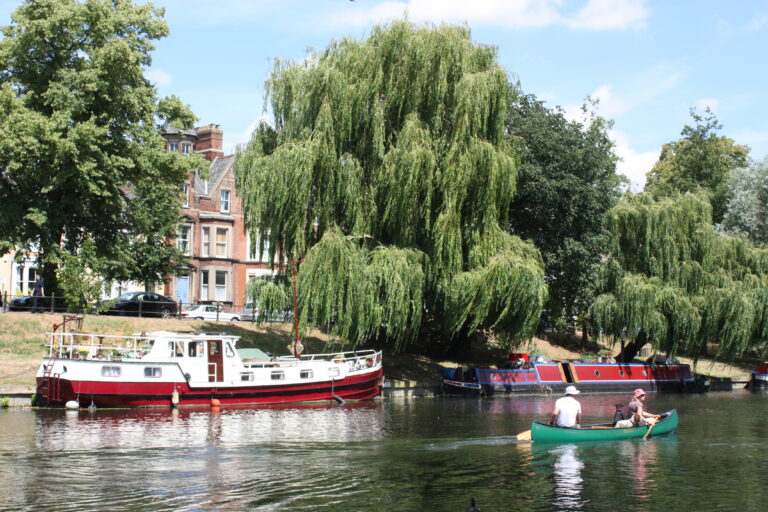
The River Dee runs along the southern and western edge of the walled city, and the riverside promenade known as The Groves is Chester’s most popular leisure area. The cast-iron Victorian bandstand, the boat hire stages, and the weeping willows along the bank create an Edwardian atmosphere preserved almost intact. Activities on the river include:

- Chester Boat cruises — 45-minute guided tours departing from the Groves, Easter through October, approximately £8 per adult
- Self-hire rowing boats — £12–£15 per hour, four-person capacity, available Easter through September
- Canoe and kayak hire — available from the Meadows boathouse, summer season
The riverside walk extends upstream toward the Meadows and downstream to the Old Dee Bridge and the salmon weir — one of the most scenic urban river walks in northwest England.
8. The Eastgate Clock and Victorian Architecture
The Eastgate Clock was erected in 1899 to celebrate Queen Victoria’s Diamond Jubilee — an ornate cast-iron clock mounted on a wrought-iron bridge spanning the Eastgate arch. It is consistently cited as the second most photographed clock in England after Big Ben, and the view along Eastgate Street from below the clock arch captures the essence of Chester’s Victorian urban character. The surrounding streetscape — black-and-white timber-framed buildings from the 1880s–1900s in a style that consciously revived and amplified Chester’s medieval architectural identity — is the most familiar image of the city worldwide.
9. Watergate Street and Medieval Heritage
Watergate Street, the western arm of the Roman cross, preserves the most authentic concentration of pre-Victorian buildings in Chester alongside the most elaborately decorated Victorian Revival facades. God’s Providence House (No. 9, dated 1652) is among the most famous individually named buildings in Chester — the inscription on the facade (“God’s Providence is Mine Inheritance”) was reportedly carved in gratitude for the house’s survival of the plague that killed many of its neighbours. Bishop Lloyd’s Palace (No. 41, 1615) has the most elaborate carved decorative panels of any building on The Rows — biblical scenes and heraldic motifs cover the entire timber-framed facade.
10. Chester Racecourse (The Roodee)
The Roodee is the oldest racecourse in England — horseracing has been held here since at least 1539. It occupies an unusual circular site within a loop of the River Dee, visible from the city walls’ western section, and race days transform the normally quiet Roodee into one of the most atmospheric spectator experiences in British racing. The main Chester race meetings run from May through September; the Chester Cup (May) and Chester Races Summer Season are the signature events. Non-race days, the Roodee is open as a park. Entry on race days from £15–£30 depending on the meeting.

Chester Attractions: At a Glance
| Attraction | Cost | Time Needed | Best Season |
|---|---|---|---|
| City Walls Walk | Free | 1.5–2 hours | Year-round |
| The Rows | Free | 1–2 hours | Year-round |
| Chester Cathedral | £5 donation | 1.5 hours | Year-round |
| Chester Zoo | £25–£32 adult | 4–5 hours | Spring–Autumn |
| Roman Amphitheatre | Free | 30 minutes | Year-round |
| Dewa Roman Experience | £7.95 adult | 1 hour | Year-round |
| Grosvenor Museum | Free | 1–1.5 hours | Year-round |
| River Dee Boat Cruise | ~£8 adult | 45 minutes | Easter–October |
| Chester Racecourse | £15–£30 race days | Half/full day | May–September |
Frequently Asked Questions
What is Chester best known for?
Chester is best known for having the most complete Roman city walls in Britain, for The Rows — its unique two-level medieval shopping galleries found nowhere else in the world — for Chester Cathedral and its exceptional medieval choir stalls, and for Chester Zoo, one of the UK’s most visited attractions. It is widely regarded as the most complete and best-preserved walled city in England.
Is Chester worth a day trip?
Yes — a day trip covers the city walls, The Rows, Chester Cathedral, and the Grosvenor Museum comfortably if you arrive early. Two days is recommended for a more relaxed experience that includes the Roman Amphitheatre, a River Dee boat trip, and Chester Zoo.
How do I get to Chester from Manchester or Liverpool?
From Manchester Piccadilly to Chester is approximately 1 hour by direct train. From Liverpool Lime Street to Chester is approximately 45 minutes. Both routes run frequent services throughout the day.
Build your days with our Chester Itinerary, find your accommodation with Where to Stay in Chester, and plan a focused weekend visit with our Chester Weekend Trip guide.



One Comment