
2 Days in York: The Perfect Weekend Itinerary (2026)
Two days in York is the ideal amount of time to experience England’s most complete medieval city — a walled Roman, Viking, and Norman city where 2,000 years of history are visible at street level without driving anywhere. Founded as the Roman fortress Eboracum in 71 AD, occupied by the Vikings as Jorvik in 866, and built into its current Gothic splendour during the Middle Ages, York offers more history per square mile than almost anywhere else in England. This itinerary covers the essential sights, the best places to eat, and the experiences that make York one of the most satisfying short-break destinations in the UK.
For practical advice on getting to York, when to visit, and what to budget, see our complete York travel guide.
Day 1: York Minster, the Shambles, City Walls, and Betty’s
Morning: York Minster
Start your York weekend at the building that dominates the city’s skyline and its entire history — York Minster, the largest Gothic cathedral in Northern Europe. Construction began in 1220 and took 252 years to complete; the result is a masterpiece of Early English, Decorated, and Perpendicular Gothic architecture in a single building. The Great East Window (1405–1408) is the largest expanse of medieval stained glass in the world — 311 individual panels covering an area the size of a tennis court.
- Admission: £14 adults, £6 children 5–16, free for under 5s
- Tower climb: Additional £7 — 275 steps to the top of the Central Tower for panoramic city views
- Hours: Monday–Saturday 9 a.m. to 5:30 p.m., Sunday 12:30–5:30 p.m.
- Time needed: 90 minutes for the interior; 2.5 hours if you climb the tower
- Pro tip: Book tower climb tickets online in advance — the time slots sell out on busy weekends
Late Morning: Walk the City Walls
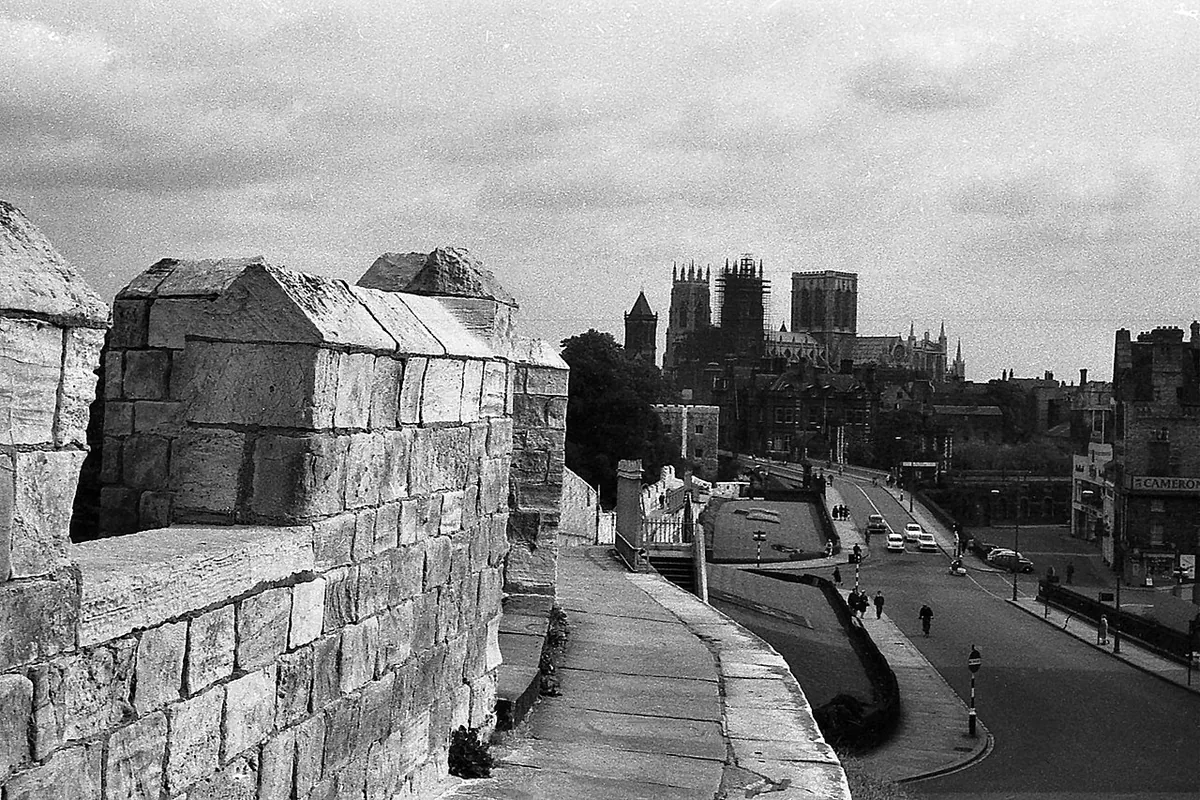
York’s medieval city walls form a complete 3.4 km circuit around the old city — the most intact example of medieval town walls in England, and the most satisfying 75-minute walk in the north of England. The section from Bootham Bar (the gateway beside York Minster) south to Micklegate Bar passes over the railway, through the Bars and Towers, and provides elevated views of the Minster’s roof and the surrounding roofscape that are impossible from street level.
Free to walk — access via the stone stairways at each of the four main gateways (Bars). The walls are open daily from dawn to dusk.
Lunch: The Shambles and Betty’s
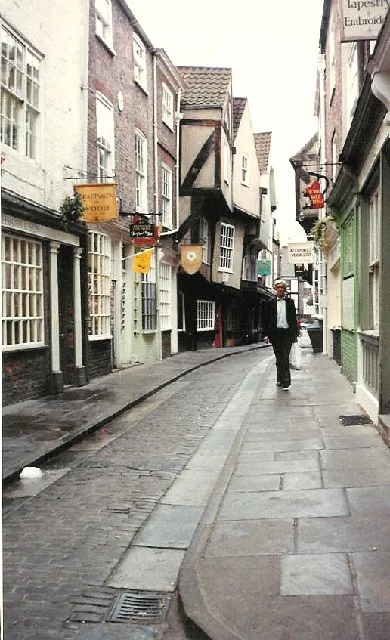
The Shambles is York’s most photographed street — a narrow medieval lane of 14th and 15th-century timber-framed buildings, many with overhanging upper floors that nearly touch across the street. It was originally the city’s butchers’ street (the name derives from the Old English shamel, meaning a slaughter bench or meat shelf) and is referenced in the Domesday Book of 1086. Today it houses independent shops, chocolatiers, and cafés.
For lunch, walk to Betty’s Café Tea Rooms on St. Helen’s Square — the most iconic café in Yorkshire, founded in 1919 by Swiss confectioner Frederick Belmont. The full Yorkshire Afternoon Tea (£32 per person, best booked in advance) or the Fat Rascal (a large fruited scone unique to Betty’s, £3.75) are both definitive York experiences. Expect a queue of 20–30 minutes without a reservation.
Afternoon: Clifford’s Tower and Castle Museum
Clifford’s Tower is the most visible remnant of York’s royal castle — a 13th-century quatrefoil stone keep on a grass motte that rises above the city’s southern skyline. The tower has a dark history: in 1190, 150 Jewish residents of York, who had taken refuge in the original wooden tower, died in a mass suicide rather than face the mob below. English Heritage has recently renovated the interior with an exhibition covering the full story.
- Admission: £8 adults, £4.80 children (English Heritage members free)
Adjacent to the tower, the Castle Museum (free admission) occupies the former York County Prison and contains one of the finest folk history collections in England — including a complete recreated Victorian cobbled street, a recreated 1960s room, and the prison cell where highwayman Dick Turpin was held before his execution in York in 1739.
Evening: Dinner and the Ghost Walk
Skosh (89 Micklegate) is York’s most exciting restaurant — a modern small-plates restaurant from New York-trained chef Neil Bentinck, serving seasonal British ingredients with global technique. The tasting menu format (6–8 small plates, approximately £45 per person) changes weekly. Book 2–3 weeks ahead for weekend evenings.
After dinner, join the Original Ghost Walk of York — the world’s oldest ghost tour, operating since 1973. The 75-minute evening walk departs from the King’s Arms pub on King’s Staith at 8 p.m. every night of the year, rain or shine, for £8 per adult. The guides are expert storytellers and the route covers some of York’s darkest history in genuinely atmospheric medieval streets.

Day 2: National Railway Museum, Jorvik Viking Centre, and the Yorkshire Museum
Morning: National Railway Museum
The National Railway Museum is the largest railway museum in the world — and it is completely free. Its two great halls and an outdoor turntable contain over 100 locomotives spanning 200 years of railway history, including Mallard (the world’s fastest steam locomotive, which set the still-unbroken steam speed record of 126 mph in 1938), a Japanese Shinkansen bullet train, Queen Victoria’s royal carriage, and the original Royal Scot. Allow a full morning — the collection is genuinely extraordinary and the scale of the Great Hall is breathtaking.
- Admission: Free
- Hours: Daily 10 a.m. to 5 p.m.
- Distance from city centre: 10-minute walk from the Minster, through the city walls at Lendal Bridge
- Time needed: 2–3 hours minimum
Midday: Jorvik Viking Centre
The Jorvik Viking Centre is built on the site of the most significant Viking archaeological excavation in British history — the Coppergate dig of 1976–1981, which uncovered 40,000 artefacts and revealed the complete street plan and timber buildings of the Viking city of Jorvik, preserved beneath York for 1,000 years. The centre uses the original excavation site and a time-car ride through a recreation of Viking-age York to tell the story of Scandinavian occupation from 866 to 954 AD.
- Admission: £15.25 adults, £11 children 5–15
- Hours: Daily 10 a.m. to 4 p.m.
- Book ahead: Entry time slots sell out on weekends — book online at jorvikvikingcentre.co.uk
Afternoon: Yorkshire Museum and Museum Gardens
The Yorkshire Museum sits in 10 acres of walled Museum Gardens that contain the ruins of St. Mary’s Abbey (founded 1055) — some of the most evocative medieval ruins in England, especially in late afternoon light. The museum inside houses the Yorkshire Hoard, one of the finest collections of Viking silver in the world, alongside Roman, Anglo-Saxon, and medieval artefacts from across the region.
- Admission: £8 adults, £5 children
- Museum Gardens: Free to enter, open daily from 7:30 a.m.
Evening: Riverside Walk and Farewell Dinner
Walk the River Ouse from Lendal Bridge to King’s Staith for the best evening view of York — the Guildhall, the Minster towers rising above the rooflines, and the medieval warehouses reflected in the river. The Star Inn the City (Museum Street, beside the Lendal Bridge) serves Yorkshire-sourced modern British food in a dramatic riverside setting from chef Andrew Pern. For a more casual farewell, Rustique (28 Castlegate) is a reliable French bistro with excellent value set menus from £28 for two courses.
2 Days in York: Quick Reference
| Time | Day 1 | Day 2 |
|---|---|---|
| Morning | York Minster + tower climb | National Railway Museum |
| Midday | City Walls + The Shambles + Betty’s | Jorvik Viking Centre |
| Afternoon | Clifford’s Tower + Castle Museum | Yorkshire Museum + Gardens |
| Evening | Skosh + Ghost Walk | River Ouse walk + Star Inn the City |
For a full breakdown of every attraction in York with opening times and admission prices, see our complete York attractions list. For hotel recommendations, see our York accommodation guide.

Frequently Asked Questions
Is 2 days enough for York?
Two days in York is enough to see the main historic highlights — York Minster, the Shambles, the City Walls, National Railway Museum, Jorvik Viking Centre, and the Castle Museum — and still have time for the ghost walk and the best restaurants. A third day allows for day trips to Castle Howard (6 miles) or the North York Moors.
What is the best time to visit York?
The best times to visit York are May to June and September to October — mild weather (15–20°C), long daylight hours, and fewer crowds than the summer school holiday peak in July and August. December is magical for York’s Christmas market (one of Europe’s best), but hotels fill fast and prices rise significantly.
How do you get to York from London?
The fastest and most practical way to get from London to York is by LNER train from London King’s Cross — fastest journey time 1 hour 47 minutes, with trains running every 30 minutes. Standard advance tickets from £25 single; walk-on fares from £90. York railway station is a 10-minute walk from the historic city centre.
Do you need a car in York?
No — York’s historic centre is entirely walkable and a car is actually a disadvantage in the city. The medieval street plan does not accommodate cars well, parking is expensive (£3–£4/hour in central car parks), and all major attractions are within a 20-minute walk of each other. Arrive by train and walk everywhere.




One Comment