

3 Days in Pai, Thailand: The Perfect Northern Thailand Itinerary (2026)
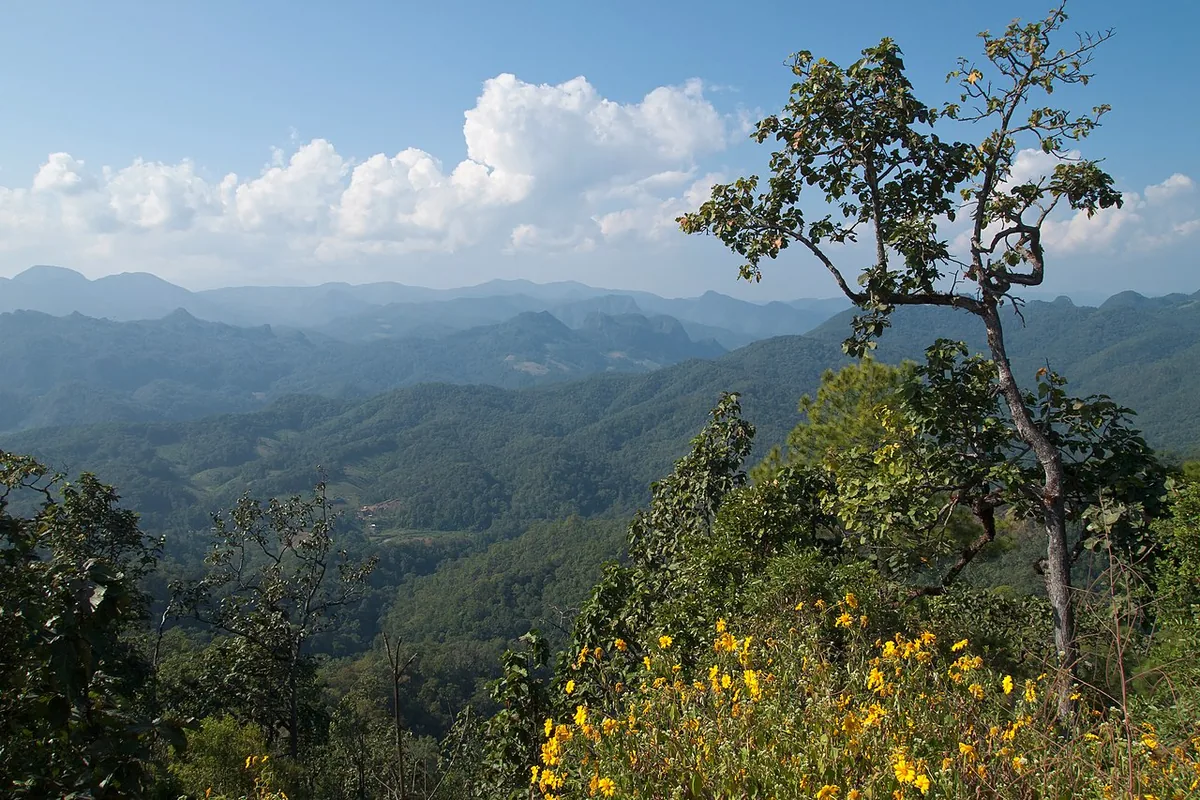
Pai is a small mountain town in Mae Hong Son Province, northwestern Thailand, sitting at about 800 metres elevation in a valley ringed by forested hills. It is 135 kilometres from Chiang Mai via a road with 762 curves — a drive that takes 3 to 4 hours by minivan and leaves many first-time visitors carsick. Once there, the town rewards the journey: a relaxed hippie-backpacker energy, a night market that opens every evening, waterfalls and hot springs within 10 kilometres, and canyon scenery that surprises most visitors who come expecting only craft beer and smoothie bowls.
Day 1: Arrive, Night Market, and Orientation
Getting There: Most visitors take a shared minivan from Chiang Mai (approximately 3 hours, 150-200 THB / $4-6 per person). Buses also run but take longer. Take the front seat if possible to reduce motion sickness on the curves. Arrive in Pai by early afternoon.
Afternoon: Rent a motorbike from any of the dozens of rental shops on the main streets (200-250 THB / $6-7 per day). This is the essential Pai transport — the town is small but the surrounding attractions require wheels. If you are not comfortable on a motorbike, bicycle rental (60-80 THB/day) covers the closer sites.
Late Afternoon: Drive 4 kilometres south of town to Pai Canyon (Kong Lan). The canyon is a series of dramatic eroded gullies and narrow sandstone ridges with steep drops on both sides. Walk the ridge paths at sunset — the best 45 minutes in Pai. Free. Go 30 minutes before sunset to get a good position on the main ridge.
Evening: Return to town for the Pai Night Market on Walking Street (Chaisongkhram Road). The market opens every evening and runs until about 11 p.m. — local food stalls selling pad thai, rotis, grilled meats, mango sticky rice, and local northern Thai dishes for 50-100 THB per item. This is the social centre of Pai each evening and the most cost-effective eating in town.
Day 2: Hot Springs, Waterfall, and the War Memorial Bridge
Morning: Drive 8 kilometres east of town to the Tha Pai Hot Springs (also called Pai Hot Springs). The springs are within a National Park area (entry 200 THB / about $6). The source water reaches 80 degrees Celsius; the bathing pools are cooled to 35-40 degrees. A natural stream alongside the pools mixes hot and cold water for outdoor bathing. Arrive early to beat the coach groups. Allow 1.5 to 2 hours.
Mid-Morning: Drive 8 kilometres northwest from town to Mo Paeng Waterfall — a multi-tiered cascade with natural pools at the base good for swimming. The waterfall runs strongest in the wet season (June-October) but remains accessible year-round. The walk from the parking area is 5 minutes. Free.
Lunch: Return to town and eat at The Om Garden Cafe (popular, expect a queue) for a breakfast-into-lunch of granola, smoothies, and eggs in a garden setting that defines the Pai aesthetic. Or eat at one of the rice and noodle shops along the main street for 50-80 THB.
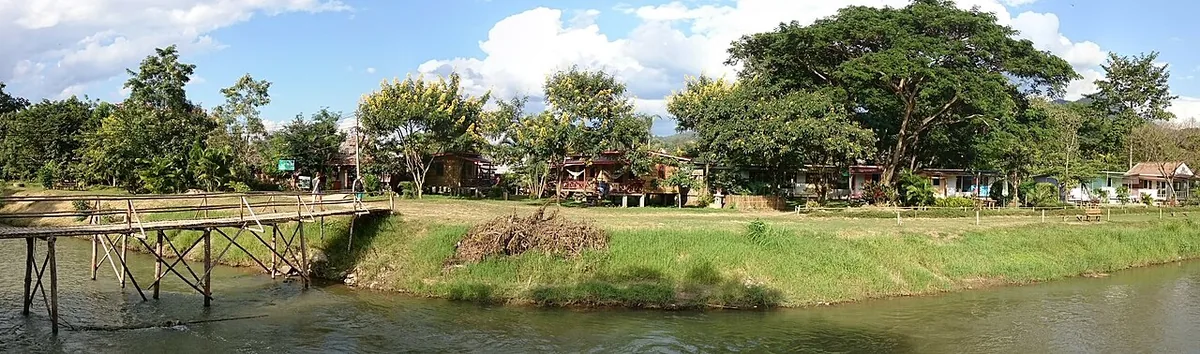
Afternoon: Drive 3 kilometres east to the World War II Memorial Bridge over the Pai River. The bamboo bridge was built by Japanese POWs during the war and has been rebuilt several times. Cross it on foot, look at the rice paddies and hills beyond, and continue to Santichon Chinese Village (4 kilometres further), a Yunnanese-style village with tea houses, traditional architecture, and hill views.

Sunset: Drive to Yun Lai Viewpoint (4 kilometres west of town) for the most celebrated sunset in Pai. In the cool season (November-February) the valley fills with mist at dawn and dusk. Free parking, short walk to the viewpoint.
Day 3: Tham Lot Cave, Elephant Sanctuary, or Slow Day
Option A — Tham Lot Cave: Drive 30 kilometres north of Pai to Tham Lot (also spelled Tham Lod) — one of the most impressive cave systems in Thailand, with a stream running through it navigable by bamboo raft. Entry with mandatory guide: approximately 150 THB per person plus raft fee. The cave contains stalactites, stalagmites, and at dusk a mass bat exodus through the main cavern. Allow 3 to 4 hours including driving.
Option B — Elephant Sanctuary: Several ethical elephant sanctuaries operate within 20 kilometres of Pai offering half-day experiences with no riding. Look for sanctuaries that explicitly prohibit riding and hooks (mahout tools). Half-day experiences run approximately 1,500-2,500 THB ($42-$70). Book directly with the sanctuary rather than through a booking platform to ensure the full fee reaches the sanctuary.
Option C — Slow Day in Pai: Pai also rewards doing very little. Rent a bicycle and cycle the flat rice paddy roads north of town. Drink coffee at a cafe on Walking Street. Have a massage (traditional Thai massage runs 200-300 THB/hour at reputable shops on the main street). Walk to Wat Mae Yen — the white temple on the hill 3 kilometres east of town, with views over the valley.
Practical Notes for Pai
- The road from Chiang Mai has 762 curves and causes motion sickness in many passengers. Sit at the front, keep your eyes on the road ahead, and avoid eating immediately before the journey.
- Motorbike rental requires a driving licence in theory but is rarely checked. Drive carefully — the mountain roads have loose gravel and unexpected corners. Helmets are provided and should always be worn.
- Best time to visit: November to February for cool, dry weather (15-25 degrees Celsius). March-May is hot and smoky (agricultural burning season). June-October is rainy season — lush but some attractions become inaccessible.
- The Pai Night Market accepts only cash. Keep small denomination Thai Baht for market food.
- ATMs are available in Pai town centre. The nearest hospital is in Chiang Mai — carry basic medical supplies for the stay.
Frequently Asked Questions
How many days do you need in Pai?
Three days is the sweet spot for Pai — enough to cover the canyon, hot springs, waterfall, night market, and one longer excursion (Tham Lot or an elephant sanctuary) without rushing. Four or five days works well for travelers who want to slow down and use Pai as a base for the surrounding Mae Hong Son Province.
Is Pai worth the long drive from Chiang Mai?
Yes. The journey is genuinely uncomfortable for many people (762 curves) but the destination is distinct enough to justify it. Pai has a specific character — mountain town, creative community, natural scenery — that Chiang Mai does not replicate.
Is Pai safe for solo travelers?
Yes. Pai is one of the most solo-traveler-friendly destinations in Thailand. The town is small, the community is international and welcoming, and the main safety consideration is motorbike rental — drive conservatively on unfamiliar mountain roads.
See our complete Pai destination hub for accommodation guides, the full activity breakdown, and hidden gems.


One Comment